Warm Broad Glow - Glenn Ligon
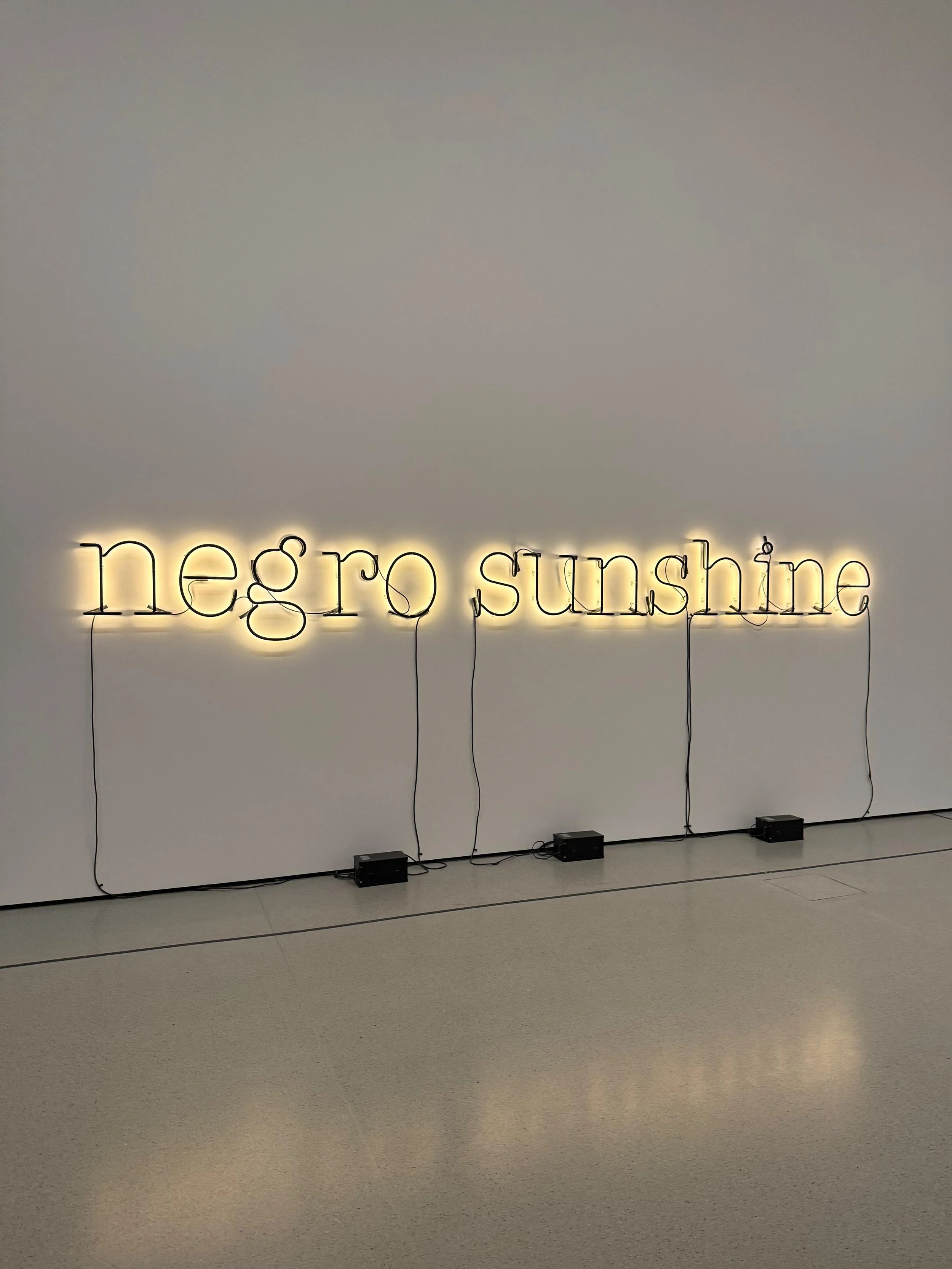
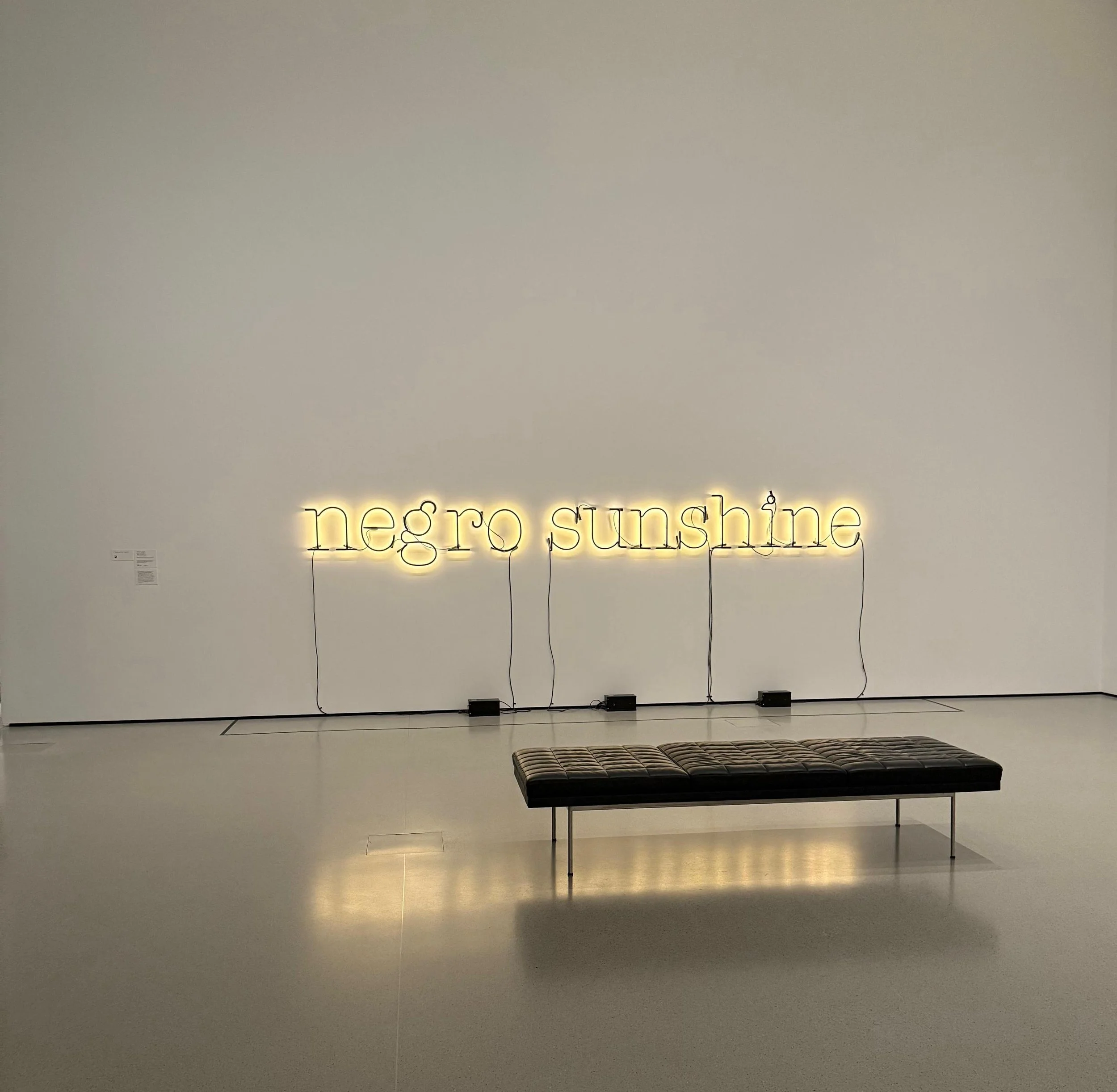
Glenn Ligon (b. 1960) is an American conceptual artist living and working in New York. In his practice, he combines text, light, and history to explore questions of identity, race, language, and cultural memory. He often draws on quotations from literature and historical sources, bringing to the surface tensions, silences, and meanings that have grown increasingly uncomfortable over time.
His works do not shout — they glow. They ask us to stop, to read, and to confront what is familiar yet unsettling.
“Rose laughed when she was happy but she had not the wide, abandoned laughter that makes the warm broad glow of negro sunshine,” Gertrude Stein wrote in her 1909 novel Three Lives. Nearly one hundred years later, Ligon decided to quote a fragment of Stein’s text for this black neon sign. The dark words remain clearly legible against a bright halo of light. In the glow of Ligon’s neon, Stein’s words—and her casual reliance on problematic racial stereotypes—are set in stark relief.”
“My name is Glenn Ligon and I'm an artist living and working in New York City.
This is a work called Warm Broad Glow. It is a quotation from a novel by Gertrude Stein called Three Lives. And Stein describes a character named Rose, who is a Black woman, quote, “Rose laughed when she was happy, but she had not the wide, abandoned laughter that makes the warm broad glow of negro sunshine. Rose was never joyous with the earthborn boundless joy of negroes.”
Stein is writing in a moment where characterizations of Black people are generally negative depictions: Black people as lazy, as irresponsible, intellectually deficient, and that Black people are always happy, that they are always smiling. And so Stein trades in those stereotypes. It's not a full picture of Black humanity.
The phrase “negro sunshine,” when I first read it, struck me because of its oddity. “Negro,” “Blackness,” is the absence of light, and sunshine is the presence of all light. So Stein is making this sort of juxtaposition for literary effect. But Black sunshine, Black joy, is an interesting, provocative phrase, given that we live in a country that, for the most part, is anti-Black. And so any expression of Black joy is a kind of resistance.”
While in New York, I had many short, ordinary conversations with African Americans. Almost all of them were filled with warmth, smiles, and lightness. Very often there was laughter — sincere and expansive, as if the whole body were involved. The kind of laughter that truly warms you.
For people like me — realists who tend to move through shadow more often than light — this installation was deeply moving. I sat there, gazing into that warmth, into that joy. I wish everyone that if they cannot yet feel full joy themselves, they might have someone close who can teach it to them. And then — like fire — may that laughter and joy spread further, to others.
Like light.
Like the sun.
