Internal Struggle — Panya Vijinthanasarn
Internal Struggle — Panya Vijinthanasarn
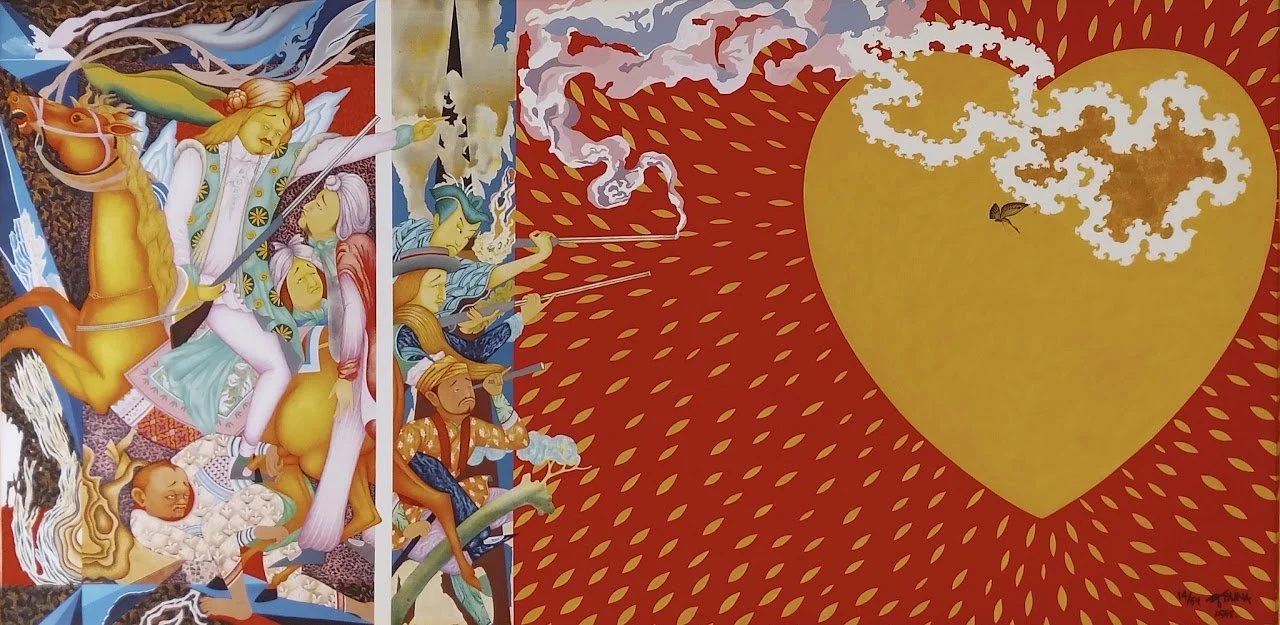
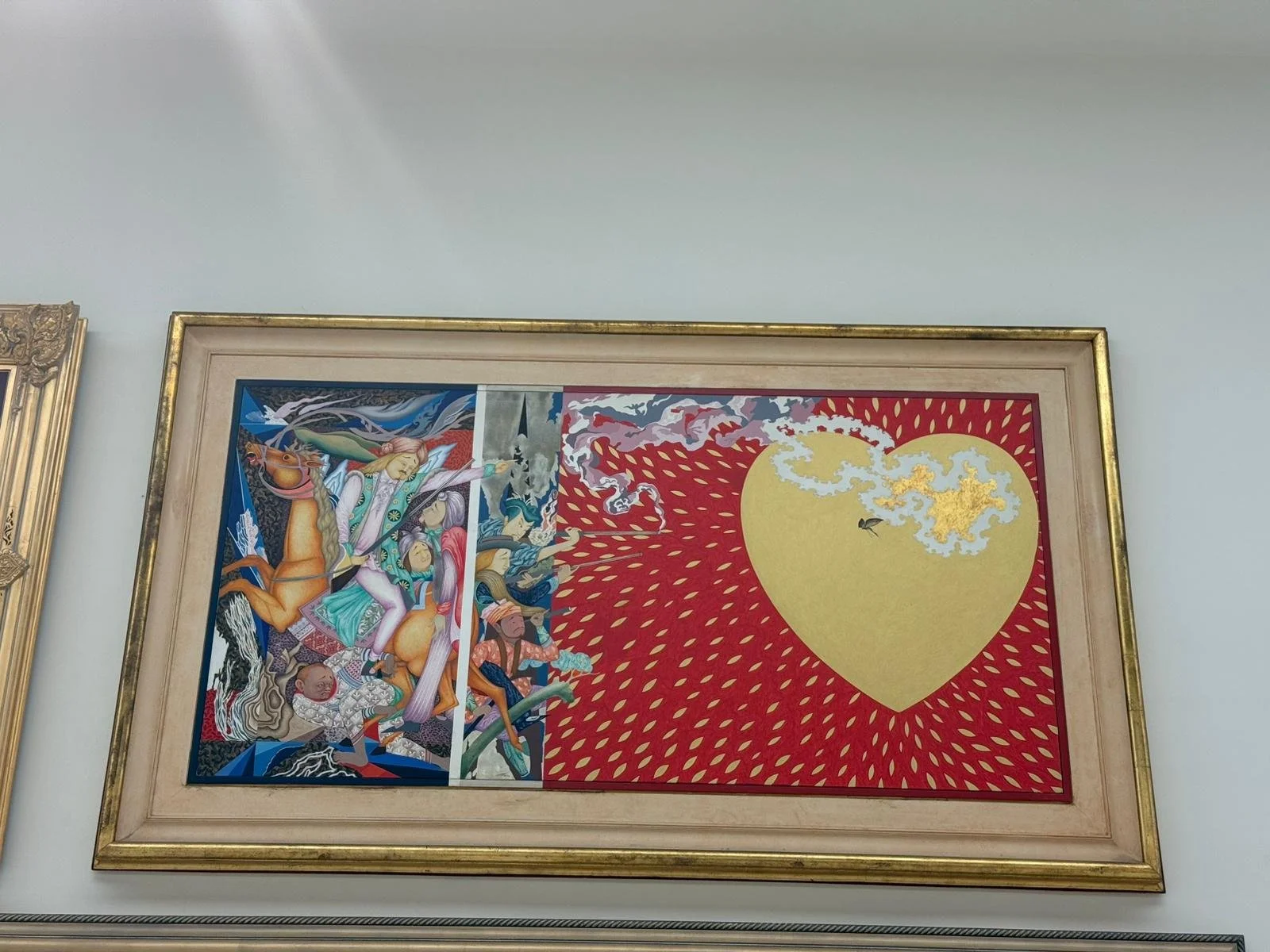
Etching and gold on canvas — Museum of Contemporary Art, Bangkok
Panya Vijinthanasarn (b. 1956) is a renowned Thai painter, professor at Silpakorn University, and one of the key figures of contemporary Neo-Thai Art. His work blends traditional Thai visual language with bold, modern forms. His paintings often explore history, spirituality, and conflict — both social and deeply internal.
**“Initially, Suvarnabhumi was influenced by civilization through trade and the spread of religion from India, leading to the adoption of Buddhism and Hinduism, the use of Sanskrit, the incorporation of Indian literature and art. Later, influences from China were received through trade routes and diplomacy, as well as from the Arab and Persian regions through trade.
By the 16th century during the Ayutthaya period, Western influence from Europe began to make its mark, including through trade, exploration, and conquest. Key European countries involved were Portugal, Spain, the Netherlands, England, and France. Portugal was the first Western nation to come to Siam for trade and diplomacy, with Duarte Fernandes, a Portuguese diplomat and explorer, being the first European to establish relations with Siam. Following him, various other foreigners traveled to Siam, such as Ok-ya Senaphimuk (Yamada Nagamasa), a Japanese samurai who served in the Ayutthaya court; Jeremias van Vliet, a Dutch merchant known in Thailand as ‘Van Vliet’; and Chao Phraya Wichayen (Constantine Phaulkon), who became the chief minister during the reign of King Narai the Great.
The adoption of Western cultures in Ayutthaya and the Suvarnabhumi region led to advancements in technology, flourishing trade, and increased use of diverse languages. It also opened opportunities for Western nations to establish settlements in the region, resulting in the creation of Japanese, Portuguese, and Dutch communities, which continue to influence the area to the present day.”**
I’m completely in love with this piece.
For me, it’s a metaphor for capitalism — that quiet, everyday battle each of us carries inside.
On the left: the chaos of history, influences, cultures, colonization, conflict, ambition, power, and people who fought to control the narrative.
On the right: a massive golden heart — seemingly calm, seemingly pure, yet something unsettling stirs across its surface. And that single tiny fly, almost invisible, yet deeply disturbing — like guilt, like a thought you can’t silence.
To me, this painting is about both forces at once: greed and a pure heart.
About what wins in our world today.
About what we try to choose for ourselves.
About how often we fight with our own impulses while living in a reality built on centuries of influence, ambition, and struggle — much of it invisible, but still felt.
It also leaves me with a question that lingers long after I step away:
What truly governs the world today — the heart or desire?
And you?
What do you see when you look at this tension between chaos and the golden heart?
