A Cure for Everything — Dana Wyse- Jesus Had A Sister Productions Dana Wyse
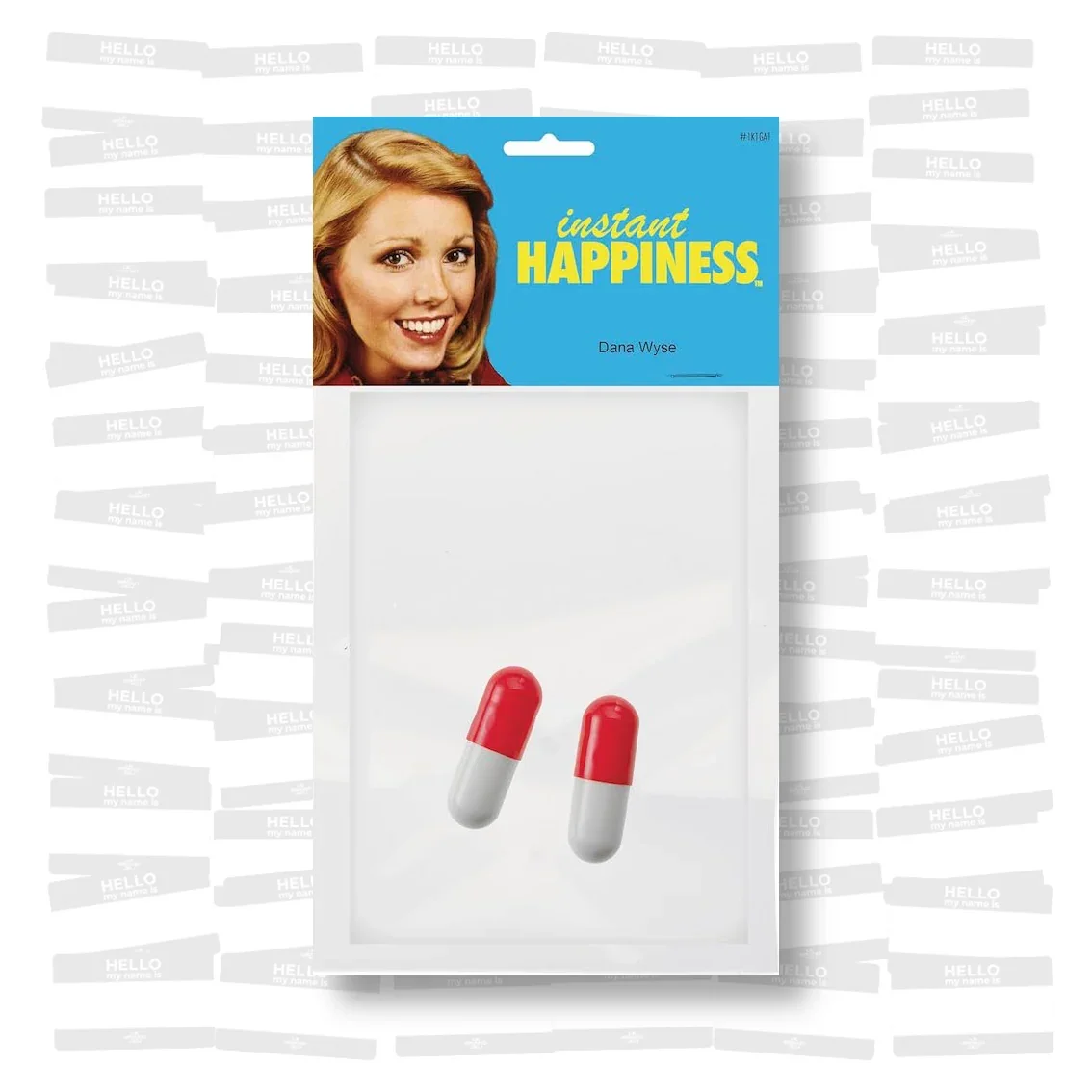
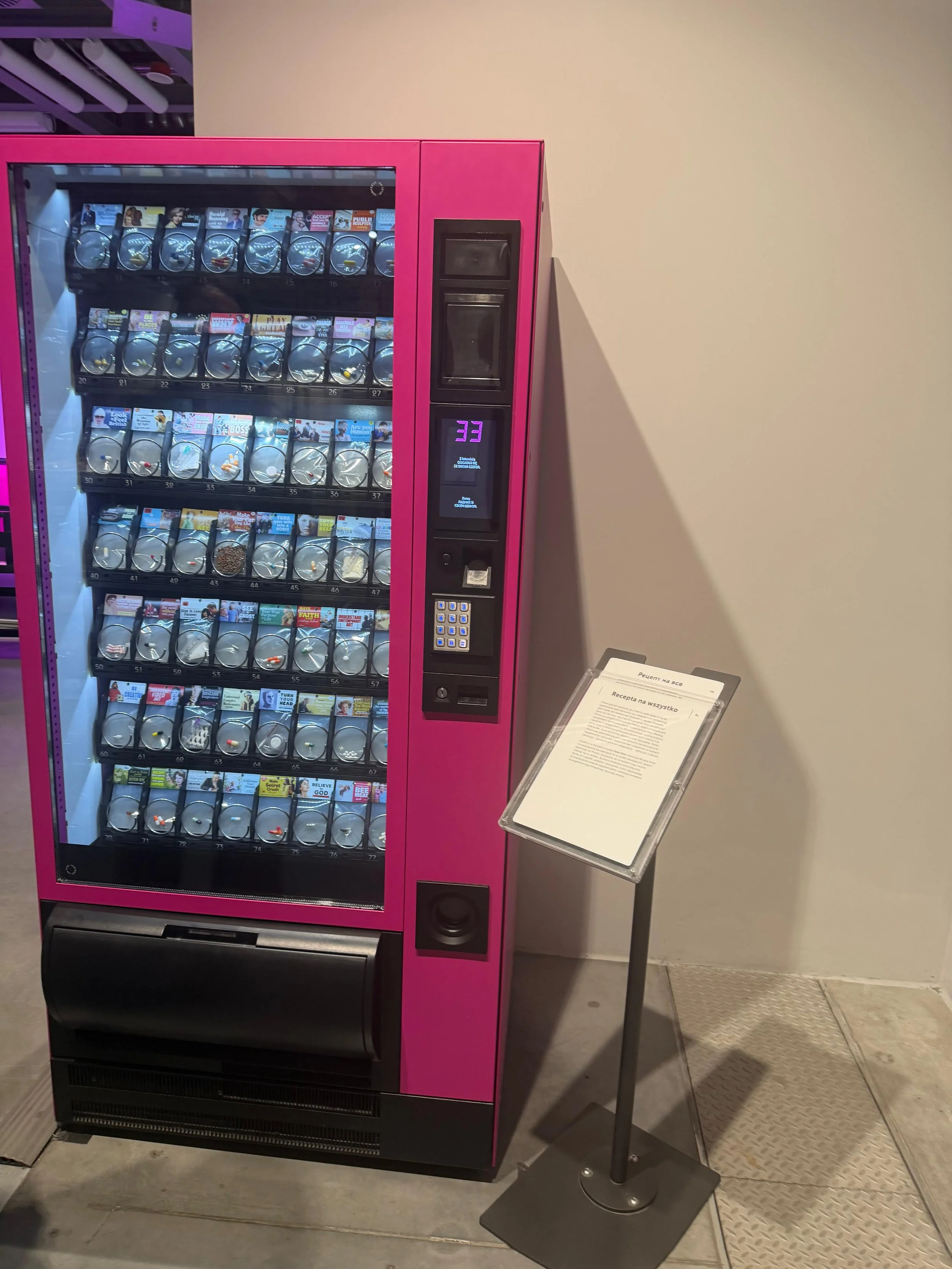
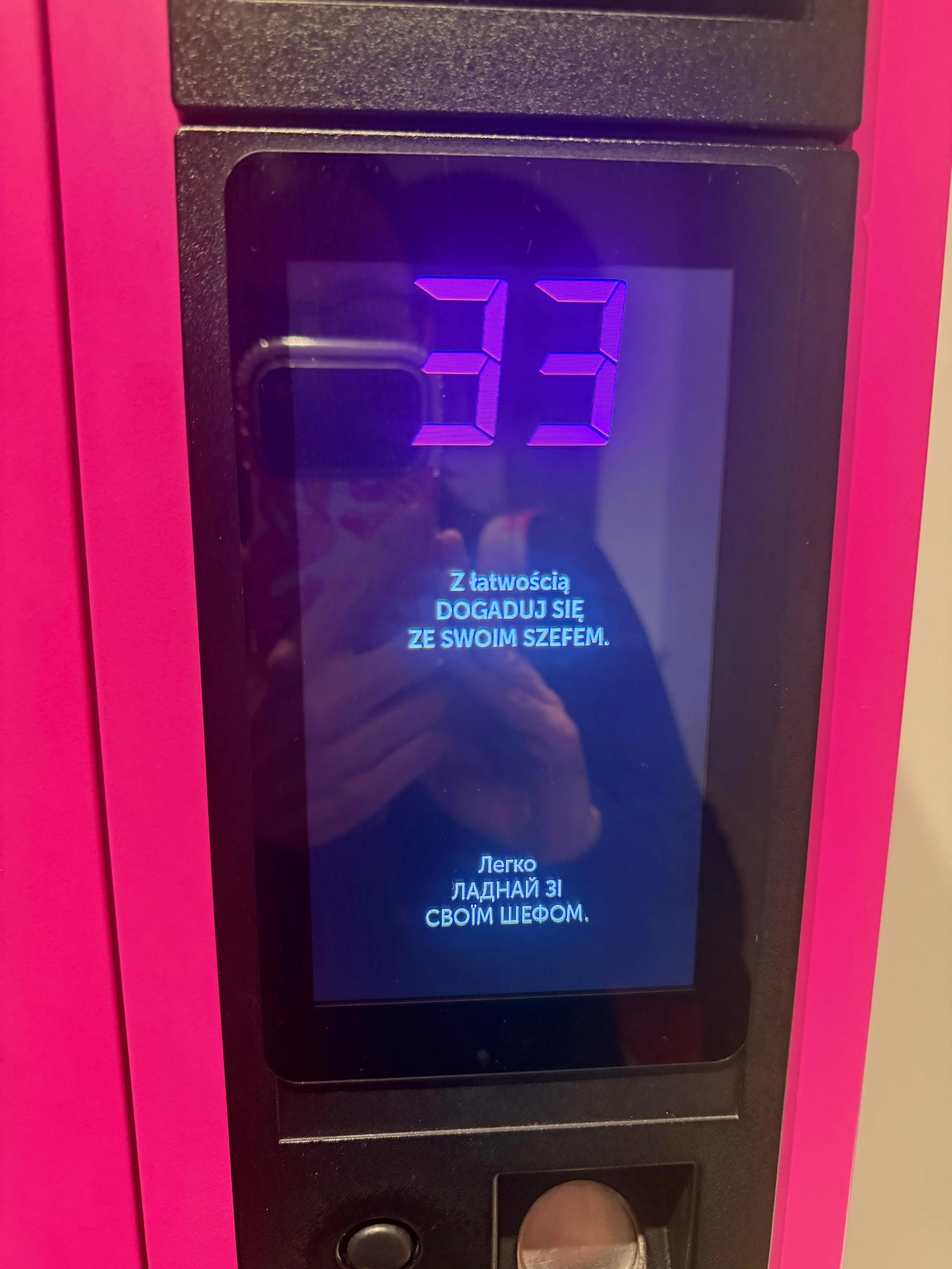
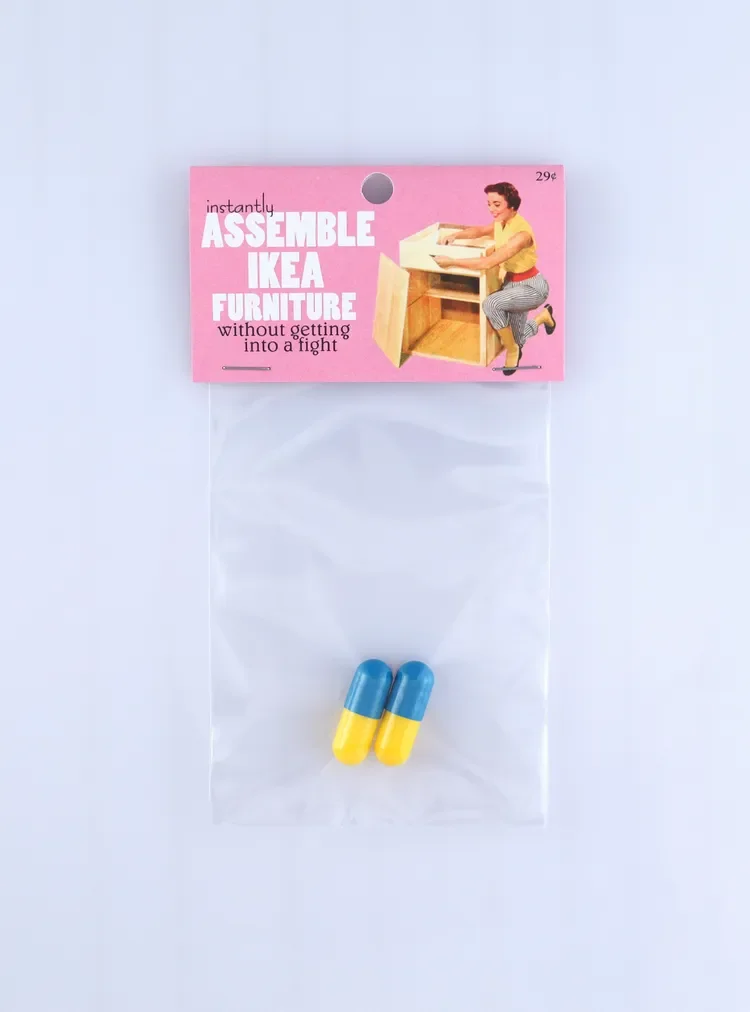
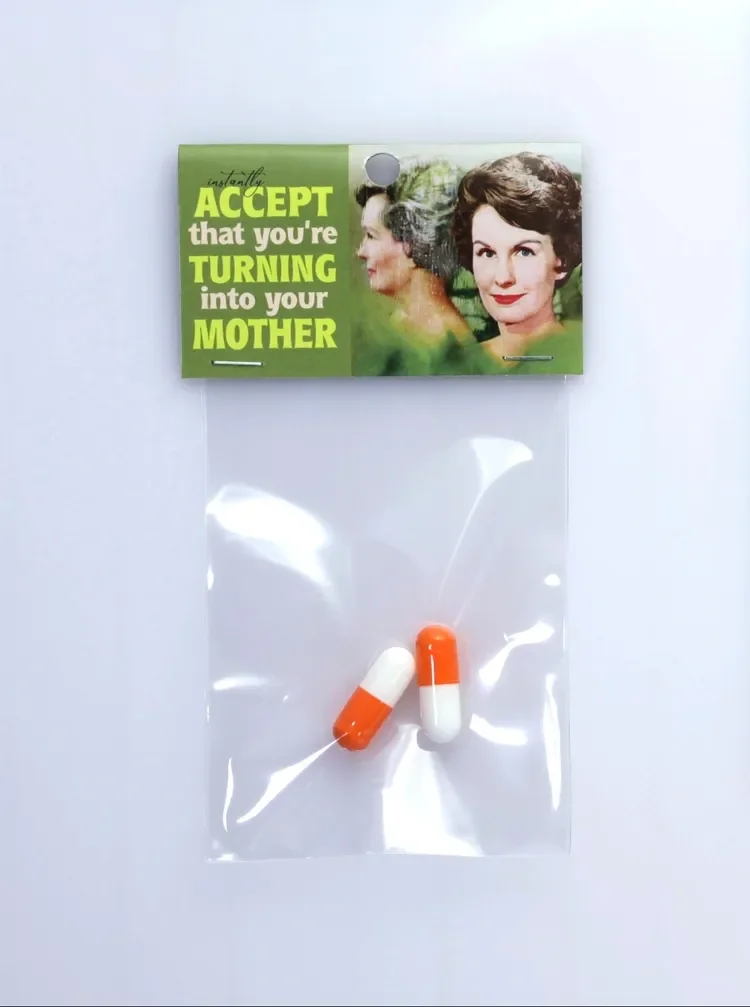
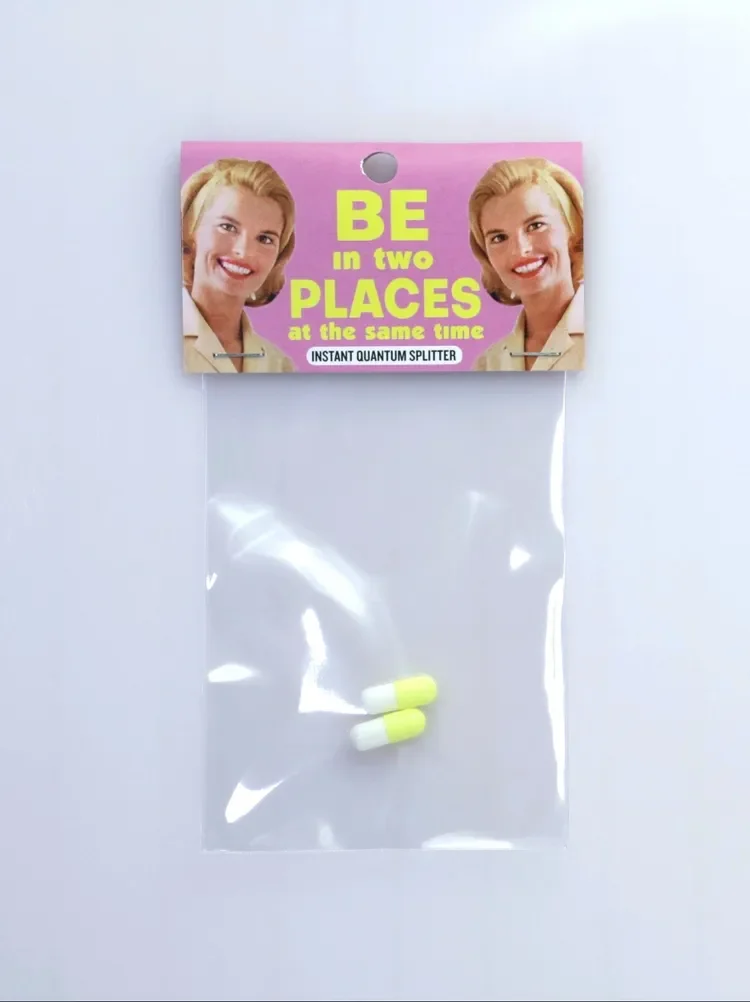
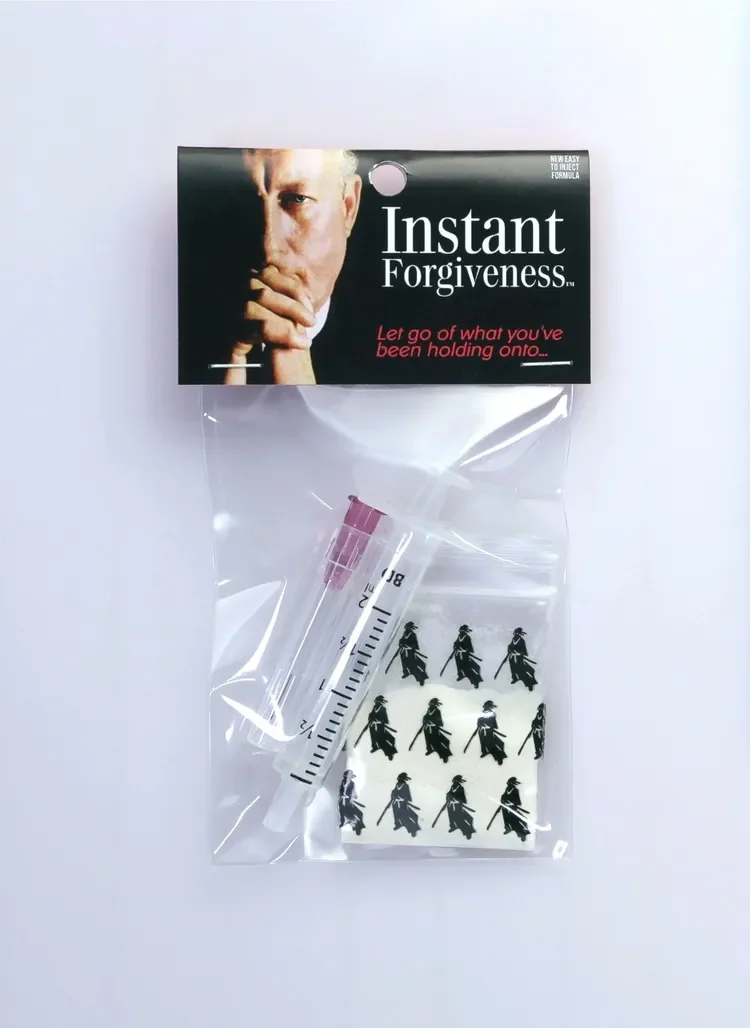
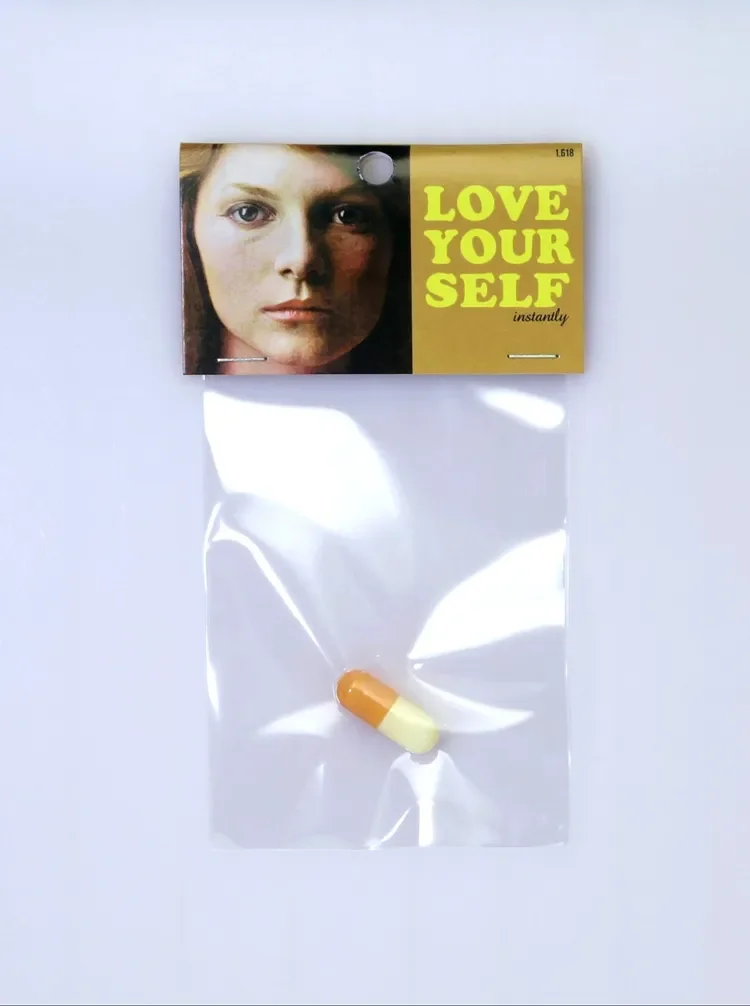
The vending machine had me from the moment I saw it. Huge, pink, and somewhere between a pharmacy, an infomercial and a snack machine — except instead of a chocolate bar, you can get Instant Happiness, a remedy that lets you Be in Two Places at the Same Time, Love Yourself Instantly, capsules to help you accept that you’re turning into your mother, or something that supposedly lets you assemble IKEA furniture without getting into a fight. The screen also flashes No. 33: “Get Along with Your Boss Easily.” Yes, please. Family-size pack.
Next to the installation, titled A Cure for Everything, I spotted that very familiar warning: “Before use, read the patient information leaflet…” Alongside it was information about just how many medicines and supplements we consume in Poland. And suddenly the ridiculous pink machine didn’t seem quite so ridiculous anymore. Because we really do live in a world where everything is supposed to have a remedy: a supplement, an app, a self-help book, a hack, a five-step programme — preferably something that works immediately and requires as little waiting, discomfort or effort as possible.
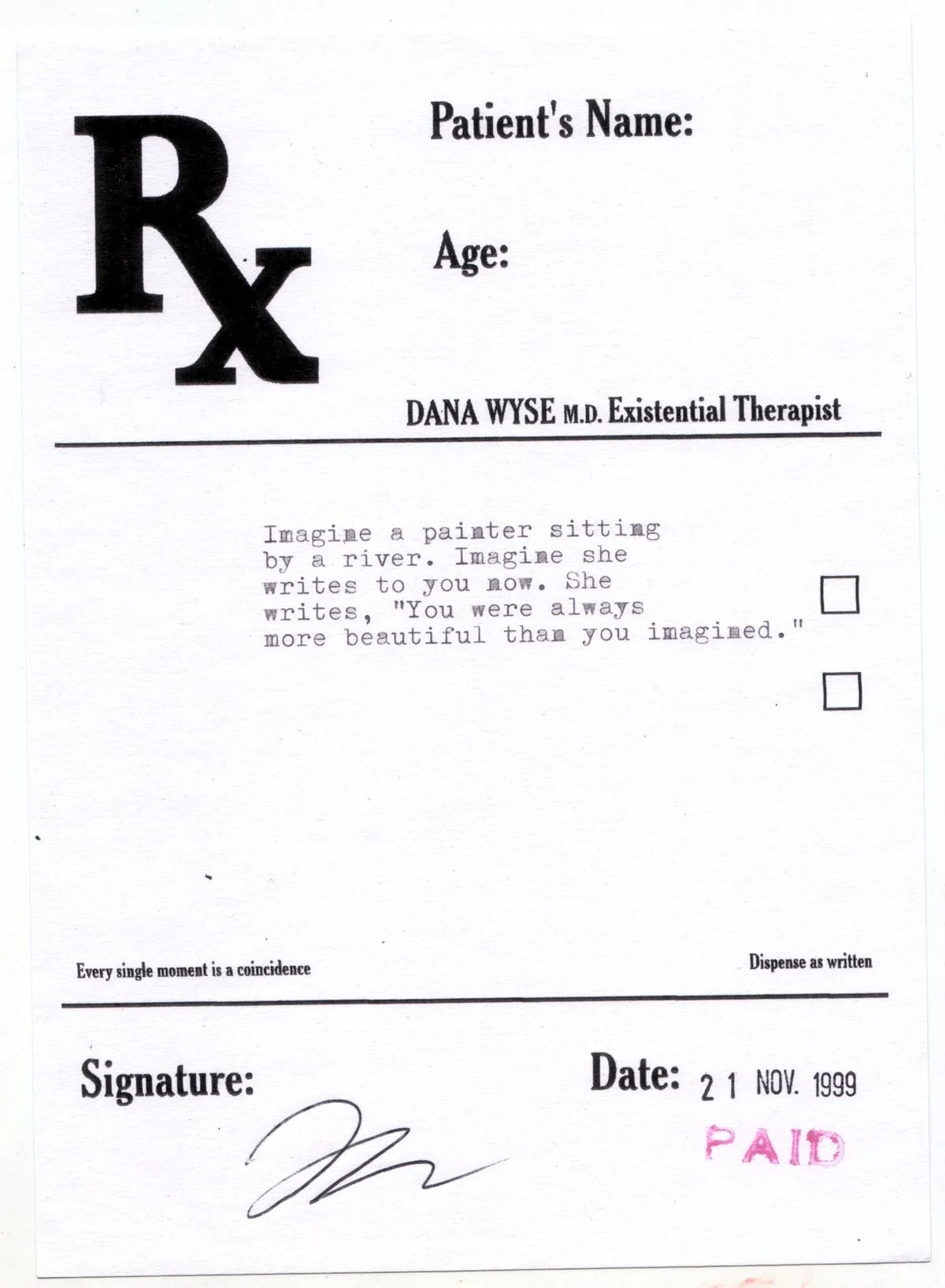
The machine itself isn’t a standalone artwork. It belongs to Jesus Had A Sister Productions, an ongoing project Canadian artist Dana Wyse began in 1996. Wyse created a fictional pharmaceutical company offering instant personal transformation, borrowing the language of advertising, infomercials and pop psychology and packaging her “medicines” in plastic bags with bright, slightly tacky labels that look as though they could have come from a discount pharmacy or supermarket. And the range keeps growing.
The best part is that the very first product Wyse made, back in 1996, was Instant Fame Pills for Artists. She showed them at a small exhibition in a Paris apartment. A few days later, a major newspaper wrote about the show, and a few months after that Wyse herself appeared on the cover of a magazine. So… maybe they work? 😆
Wyse later joked that one tiny pill really had changed the course of her life. And that’s where the project becomes much more interesting to me than simply “haha, a happiness pill”. She’s poking fun at our obsession with quick fixes, but she also knows exactly what happens when we look at those packages. For the first second, we are not thinking: What a clever critique of consumer culture. We are thinking: Oh. I need that one.
My friend spotted Be in Two Places at the Same Time and immediately said, “That’s the pill for you.” Obviously, she was right. I love crushing my to-do list, ticking things off and getting that tiny rush of: done, next! I could work while sitting with my parents at a doctor’s appointment, walk the dog while studying Japanese, take Pablo to nose work or fitness and somehow learn Japanese at the same time, sit on a call while sorting out the flat. Everything. At once. Perfect. 😆
Except after about thirty seconds I realised that if this pill actually existed, I probably wouldn’t use it to reclaim time for myself. I’d just cram twice as many responsibilities into the same twenty-four hours. And maybe that’s why Wyse’s products work a little like a Rorschach test. You choose your “medicine” and suddenly learn what is actually bothering you most. If I reach for Love Yourself Instantly, the pill may not solve anything, but it does make a pretty good diagnosis. If the one I want most is Be in Two Places at the Same Time, perhaps the real problem isn’t that I can’t clone myself. Maybe it’s that I’m trying to fit two lives into one. The pill fixes nothing, but it does tell you exactly where it hurts.
Naturally, I also started looking for Stop Buying Board Games Instantly. Couldn’t find it. Apparently even fictional pharmacology has its limits.
One product did catch my attention in particular, though: Instantly Understand What Your Dog Is Really Thinking. My first reaction was: YES. Finally, I’ll know what Pablo actually thinks. Then, about a second later: wait. What if he doesn’t actually like me? 😂 What if that long, soulful stare doesn’t mean “I love you,” but “that treat was offensively small”? What if, while I’m sitting there contemplating the meaning of life, he has spent the last five minutes thinking exclusively about whether someone is going to drop a French fry?
The packaging itself even asks: “What if the only thing that really matters in life is the next French fry dropped on the floor?” And suddenly I start wondering whether I’m the one who needs a spray to understand the dog at all. Maybe the dog already knows the secret to happiness and I’m the one making everything unnecessarily complicated. Actually, I think I’d rather not know. 😆
What I find most wonderfully twisted about the whole project is that art mocking the idea that everything can be bought has itself become something you can buy. Wyse’s work has appeared in museum shops and other retail spaces, and some of her “remedies” can still be bought directly from the artist for around €10. Assemble IKEA Furniture Without Getting Into a Fight, for example, comes in an edition of 1,000 and costs exactly that. So you leave an exhibition after reflecting deeply on consumerism… and buy yourself a pill. Perfect.
Wyse pushed the idea even further in 2007 with a book called How To Turn Your Addiction to Prescription Drugs into a Successful Art Career, its title parodying the North American self-help books of the 1960s and 70s. Inside, alongside hundreds of illustrations, you’ll find things like a hidden flipbook, a match, a real coin and a signed drawing. And if you order the right version directly from the artist, you can apparently also request… a dead fly. I genuinely don’t know what I admire more: the artistic commitment or the logistics of fulfilling those orders.
And that brings me back to the question that stayed with me after seeing the machine. If you could genuinely swallow a pill and stop making the same mistake, love yourself, get along with your boss, accept your mother or come to terms with getting older — would that count as real change? Or is the whole annoying process actually part of the point?
If I struggle with setting boundaries, I could dream of a capsule called Set Healthy Boundaries Instantly. But if I skip the first awkward “no,” the guilt afterwards, someone else being annoyed with me and the uncomfortable necessity of trying again — have I actually learned how to set a boundary? If I keep making the same mistake, perhaps I don’t need a pill that magically switches the behaviour off. Maybe I need to understand why I keep doing it. And perhaps the effort is exactly what allows us to value the result once we finally get there.
A Cure for Everything is funny, but it’s also slightly uncomfortable, because Dana Wyse’s world isn’t nearly as far removed from ours as we might like to think. Everything needs a solution. Everything needs a product. Everything needs a shortcut. Ideally one that requires no time, no frustration and very little patience. But maybe some things simply can’t be skipped. Maybe we have to live through them, mess them up, try again and only then actually change.
Although if Dana Wyse ever releases Stop Buying Board Games Instantly, I withdraw this entire reflection. I’ll take two packs. Just in case. 😆
What about you — which “medicine” from Dana Wyse’s pharmacy would you buy first?
