100 meters
100 Meters to Freedom. How to Bend Reality When the World Refuses to Let You Win
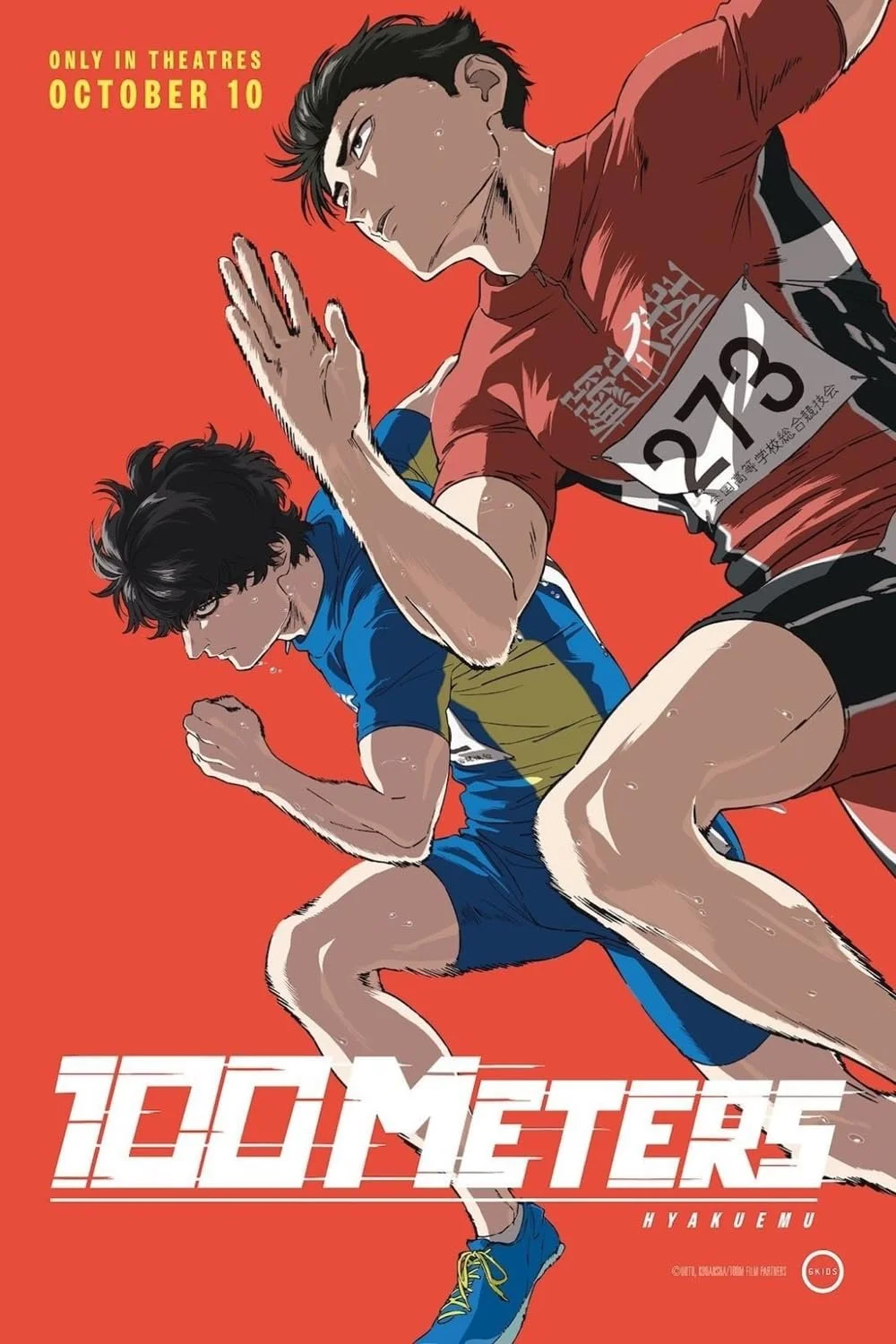
Some stories don’t ask for attention. They simply ram right through us. The anime film "100 Meters" is one of those works. Critics worldwide rave about its raw, rotoscoped animation, which gives the races a painful, almost tangible realism. But beneath the brilliant visual layer lies something much deeper—a powerful discourse on the human psyche. It is the anatomy of ambition broken down into seconds, meters, and the vastly different perspectives of the runners.
The Two Poles of Rivalry
The story intertwines vastly different fates, challenging how we understand the concepts of talent and determination.
On one hand, we meet Togashi—a boy gifted with absolute talent, a genius child doomed to eternal winning without a shadow of effort. Over time, however, he must face a brutal truth and find a new reason to keep running when his innate gift is no longer enough, and a grueling stagnation creeps in its place.
On the other side stands Komiya—an ordinary boy with no technique whatsoever, completely ignored by everyone around him. He doesn't run for trophies, but to escape the overwhelming problems of everyday life and to prove to himself that he can conquer his own weaknesses.
Their paths cross on the track. It is Komiya—the boy who once humbly confessed: "Even someone like me might taste victory just once"—who, through murderous, almost inhuman hard work, breaks his fateful streak and becomes a multiple-time champion. Togashi, meanwhile, must face a brutal downfall, a loss of faith, and the bitterness of his own mediocrity.
Zaitsu: The Loneliness of the Absolute Champion
The most beautiful thing about this film is that we get to know the minds of all the runners. The undisputed champion of Japan, Zaitsu, seems invincible. Yet, there is not an ounce of arrogance in him—he is an incredibly righteous man, full of respect for the sport. When asked: "You're unbeatable. Why do you keep challenging yourself?", his answer strips away all illusions: "I'm a living thing. I'll die eventually, and I'll never be born again. That's the reason."
And yet, the darkest shadows are found at the very summit. Zaitsu watches with fear the desperate path Komiya chooses. He sees his own demons in it. Anxious, he tries to warn the boy against making the worst mistake—against the emptiness to which he doomed himself. The real shattering realization is the absolute champion's dark confession:
"I lost my fighting spirit in exchange for the title of undisputed champion. The faster I go, the more everyone falls behind. When I look to the side, nobody's there. The view from that position is the same as that from last place. What gives us a true triumph and pure joy is neither records nor medals. It's opponents. First place earned by competing with someone..."
I have absolute respect for this character. Especially for how he behaves at the very end—when Kaido finally snatches the victory from him, Zaitsu announces his retirement with immense class. He walks away without regret, because he finally received what he had been waiting for all these years: someone who matched him on the track.
Kaido's Rebellion, or How to Bend Reality
Oto dokładne tłumaczenie tego poprawionego fragmentu. Zachowałem w nim całą tę jasność, godność i potężny przekaz o ciągłym nacisku, o który Ci chodziło:
Kaido's Rebellion, or How to Bend Reality
Here we must pause to look at the character who completely captivated me—Kaido. In the sports world, he is known as "Forever Second." We are not talking about a momentary burst of effort. Kaido is a grey-haired senior who, for fifteen long years, stood at the starting line only to take second place. But there isn't an ounce of bitterness in him. He is a thoroughly positive man who perfectly knows his own worth and, with calm certainty, intends to prove it to the world.
In the original version, his character is given a magnetic, raw depth by the legendary Kenjiro Tsuda. This dense, psychological trance on the track is amplified by the soundtrack composed by Hiroaki Tsutsumi—known precisely for his work on Jujutsu Kaisen. It is thanks to this striking fusion of sound and voice that Kaido's story becomes so piercing. I believe in it implicitly because I have experienced exactly the same thing on my own skin many times.
Kaido is a man seemingly condemned to second place, invisible to the crowd, ignored in the rankings. And yet, during the final race against the elite, he does something spectacular—relying on his unshakable self-belief, through the sheer force of absolute will, he bends reality.
"It's funny that this reality doesn't allow me to win. But also it's funny that I'm 100% sure I'll taste victory next time. Do you know why? Because you can escape from reality. If my victory is unrealistic, I must escape from that reality. Escaping reality means I have hopes for myself. It shows I haven't given up on me. No matter what opinions, insights, truths, or enlightenment people around me may throw at me... I value myself! That's my mission, work, reason to live, and why I run. Listen, Togashi. You can escape reality as long as you grasp why you run."
This is exactly the lesson we must take away from this: Kaido was second for fifteen years. He never gave up because he never doubted his own worth. A few timid attempts will not solve our problems. Only continuous pressure, a relentless push, and unapologetically bending reality will ensure that, in the end, reality itself will eventually have to bend.
Why Do We Run at All?
To survive and not give up in the game of life, we must answer one fundamental question: Why do we want to do this?
After painful turbulence, a drop in form, and a loss of faith, Togashi finally finds the answer. He regains his strength not when he wants to prove his superiority, but when he decides to be a pillar of support for someone else: "Don't run to win, but for someone else out there. That's my reason for running."
How does the film end? Our main characters, shaped by years of pain and triumphs, run shoulder to shoulder. At the exact same pace, step by step, just like in their elementary school days. Viewers often ask—who ultimately won that race? The answer hangs in the air, because at that stage, it no longer matters at all.
The Weight of Youth: The Uoto Phenomenon
Finally, there is a fact that magnifies the power of this work and leaves you in absolute awe. When the Japanese creator, hiding under the pseudonym Uoto, drew and wrote this manga (the original source material for the film) dripping with existential dread, he was only 18 years old.
It is staggering that someone so young could diagnose the mechanisms of human burnout, the loneliness at the top, and paralyzing pressure with the maturity of someone who has lived several lives. He showed us a brutal yet beautiful truth: medals and the applause of crowds do not matter.
What matters is to—just like Kaido—never let the world take away your hope, and never lose yourself in the loneliness of victory.
