Yes -Jules
In my previous post, I wrote about my little challenge: roughly twice a month, I want to say “yes” to something I would normally dismiss with an almost automatic “no”. I don’t mean dropping everything and moving to Japan ;), buying more board games — unfortunately, I require absolutely no encouragement there — or suddenly deciding to go bungee jumping. It is more about catching my own brain red-handed, at exactly the moment when it has already decided for me that something will be tiring, weird, stressful, or simply “not my thing”. And lately, I have managed to switch that autopilot off a few times.
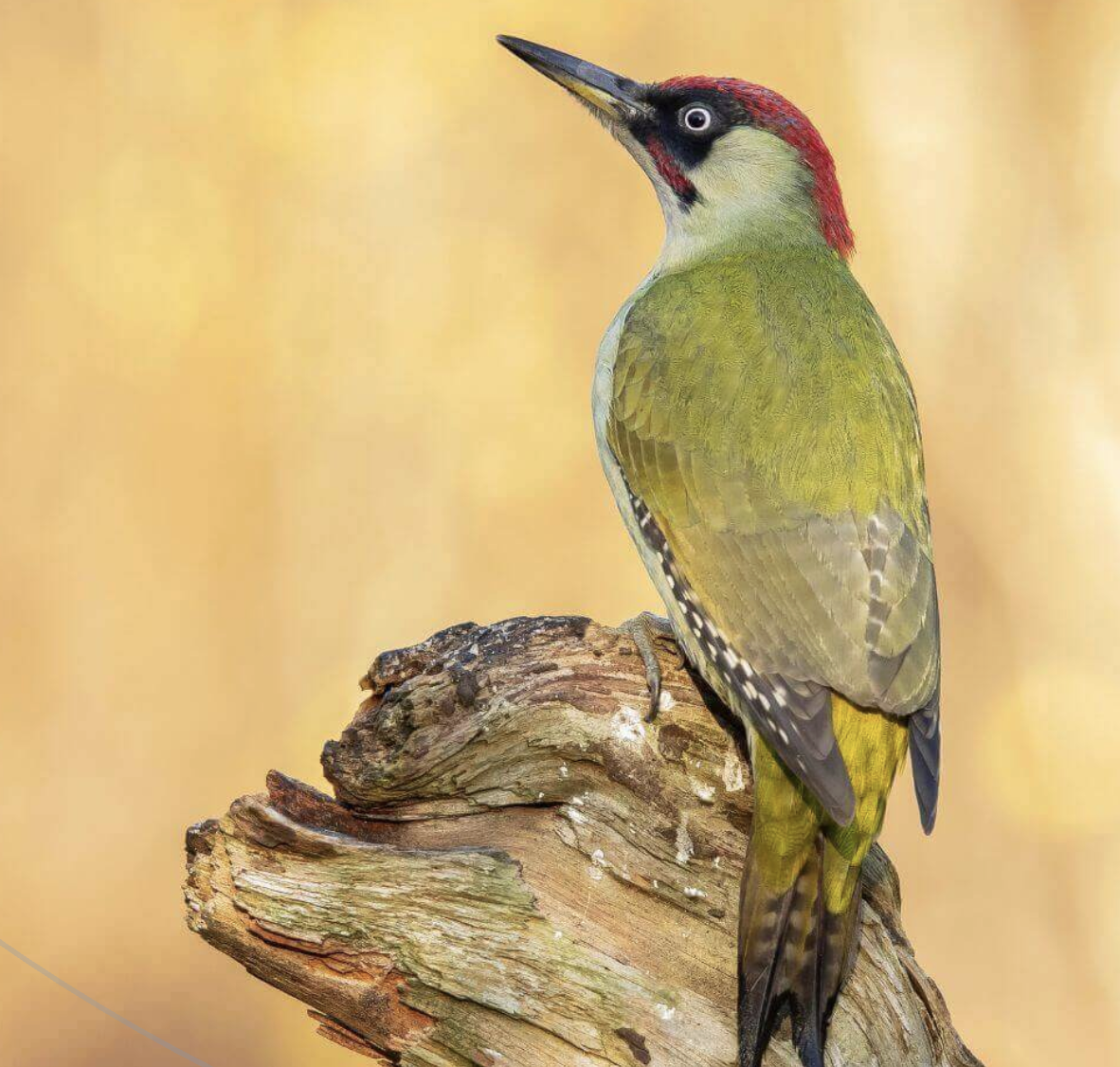
1. Wingspan — A GREEN WOODPECKER.
My first “yes” was, naturally, inspired by a board game. My beloved Wingspan. Since I can happily spend hours admiring birds printed on little pieces of cardboard, I decided it was probably time to learn how to recognise some of the non-cardboard ones too. So I found a birdwatching walk in Warsaw and convinced my two besties — twins — to come with me. There was only one problem: we had to get up at around six or seven in the morning. On a Sunday. For three people whose natural Sunday-morning habitat is a bed, this was a significant sacrifice. I was excited. The girls agreed to suffer out of love for me. In the end, we all suffered, but joyfully, because for the first time in my life I saw a European green woodpecker (Picus viridis).
I did not even know they existed. Suddenly we were explorers discovering entirely new species — new to us, at least ;).And then it just kept getting better. I learned why cormorants sometimes stand around with their wings spread wide. I had seen them do it countless times and had somehow never thought to ask: “Wait, why is that bird standing like that?” Apparently, it is drying its feathers after diving. Its plumage absorbs some water, so afterwards you can often see a cormorant striking that very distinctive pose. Tiny fact, but now I will never again see one with its wings spread and simply think: “Oh. That bird is standing weirdly.”
Next shock: a sparrow might not actually be a sparrow. It might be a Eurasian tree sparrow.
Tree sparrows have a brown cap and a distinctive black patch on their pale cheek. A male house sparrow, on the other hand, has a greyer crown and no black cheek spot. Naturally, I now inspect the cheeks of every small brown bird I see. I did not expect my life to take this particular turn. But it gets better, because house sparrows and tree sparrows occasionally have interspecies romances. 😆 Yes, really. Mixed pairs have been recorded, and they can even produce hybrid offspring showing features of both species. Researchers have described cases where one species was locally scarce and the dating pool was, shall we say, somewhat limited.So now I am not only checking birds’ cheeks. I also have to consider the possibility that I am looking at the result of an avian mésalliance.
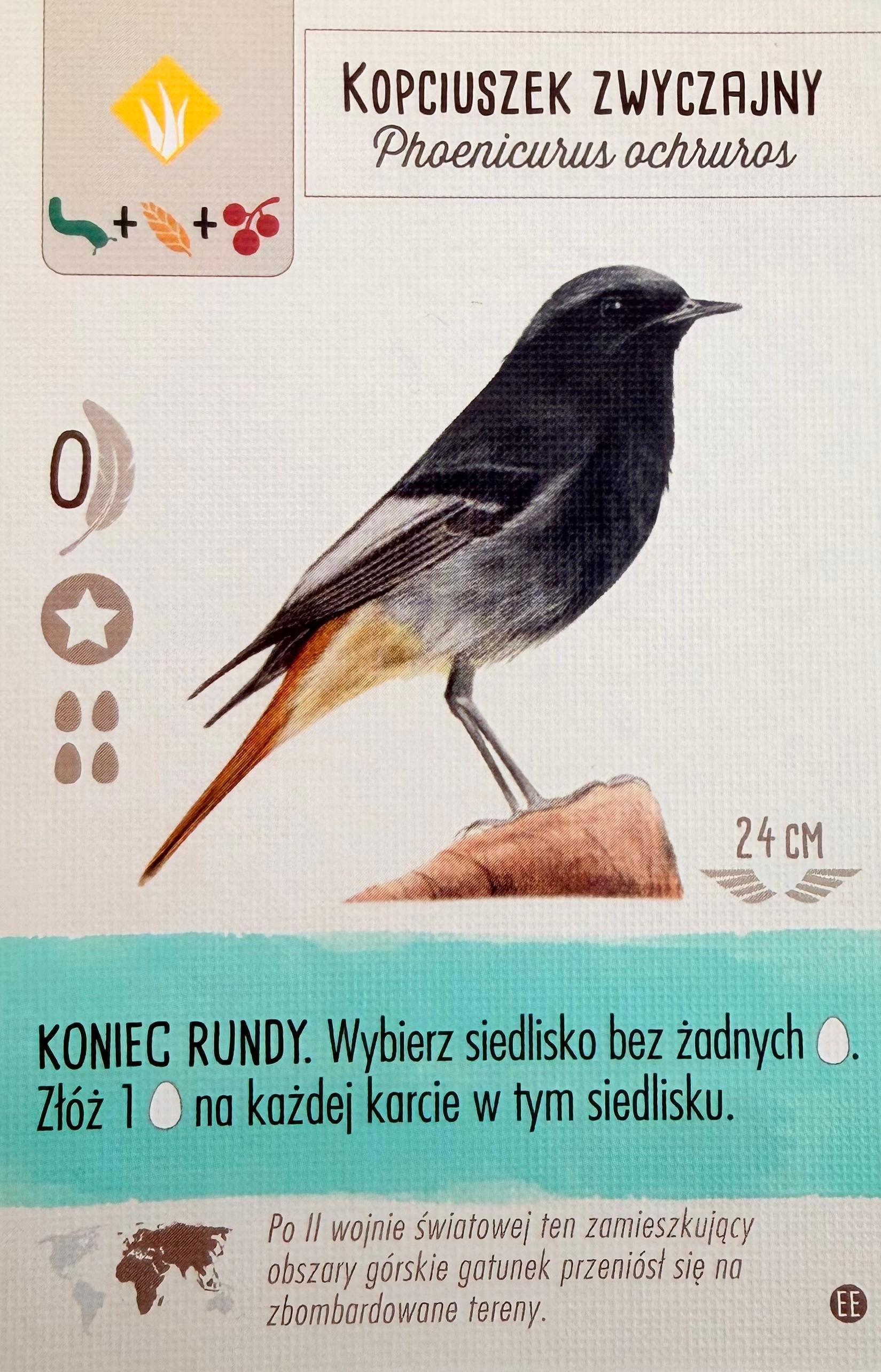
And if you know the European Expansion for Wingspan, you may have noticed something else that once made me laugh: something like 80% of the cards seemed to suggest that European birds have a serious problem with feeling special. “Common” this. “Common” that. Honestly, I think we may need a collective hug as a continent. 😂 My personal favourite was Kopciuszek zwyczajny — Common Redstart. The Polish word kopciuszek is also Cinderella, so obviously I immediately renamed it Common Cinderella and briefly considered changing the name of my Instagram account.
Which makes the story of the common gull even more interesting, because in Polish it quite literally stopped being “common” — even in name. The old Polish name mewa pospolita essentially meant “common gull”, and it became increasingly misleading as the species declined dramatically. From 2007 onwards, the Polish population began falling sharply, with the decline estimated at around 80% after roughly a decade. Meanwhile, calling something “common” rather suggests: relax, we have loads of these. Today, in Polish, it is called mewa siwa instead.
And then came perhaps the hottest piece of gossip of the entire walk — practically tabloid territory: power, a national symbol and a wardrobe scandal. 😆 There is an interesting ornithological mystery surrounding Poland’s White Eagle. The white-tailed eagle (Haliaeetus albicilla) is often suggested as one possible natural inspiration for it, although the White Eagle is, of course, first and foremost a stylised heraldic symbol rather than a zoologically accurate portrait of any single species. But the difference between white-tailed eagles and the “true eagles” is fantastic and very easy to remember. Eagles from the genus Aquila, such as the golden eagle, basically wear long johns — their legs are feathered all the way down to the toes. White-tailed eagles from the genus Haliaeetus, meanwhile, prefer capri pants: the lower part of the leg is bare. So in addition to examining birds’ cheeks, I am apparently now also inspecting their trousers. I genuinely do not know at what point my life took this turn. 😆
Still, the undisputed winner of the entire walk was a new word: kleptoparasitism.It is a behaviour in which one animal steals or takes advantage of food obtained by another.Does this remind me of the little tub of Rolmlecz cheese I personally acquired at the shop, carefully placed in the fridge, and later discovered had been eaten by my husband?Perhaps. ;)
2. Bat Night at the Kamień Educational Pavilion.
My second “yes” fitted perfectly with my long-standing affection for Batman, vampires, and creatures generally conducting their business after dark. I went to the Kamień Educational Pavilion — a place I had not even known existed — for “In Search of Bats”, an evening walk with a chiropterologist, including bat detection and interpretation of echolocation signals. The event was led by Katarzyna Thor. If someone offers me the chance to wander along the Vistula at night with a special device for eavesdropping on bats, saying “no” becomes surprisingly difficult. We walked after dark with bat detectors — you can actually buy one yourself — which allowed us to hear their echolocation calls. And it was fantastic. You are walking along the river at night and suddenly realise that there has been an entire air-traffic system operating above your head all this time. You simply never had the right receiver. Like discovering a hidden frequency of the city. And once again, an entire world opened up that I knew embarrassingly little about. Poland is home to dozens of bat species; ours are insectivorous and all are protected. Bats are not blind either — they can see, while also using echolocation to navigate and hunt in the dark. And they are incredibly useful. Every night they consume enormous numbers of insects, including mosquitoes, moths and species considered agricultural or forestry pests. Elsewhere in the world, bats also pollinate plants and disperse seeds.So their contribution to the planet extends considerably beyond living in haunted castles and providing atmosphere for vampire films.
One very practical thing stayed with me in particular: do not use sticky fly traps anywhere bats might be able to reach them.A bat can get a wing, fur, foot or its delicate wing membrane stuck to the glue. As it struggles to escape, more of its body can become trapped, causing serious injuries. Removing a bat without causing further damage is extremely difficult, and without help such a trap can be fatal.It had genuinely never occurred to me before. The most fascinating thing for me, though, was learning about common vampire bats — bats that really do feed on blood.
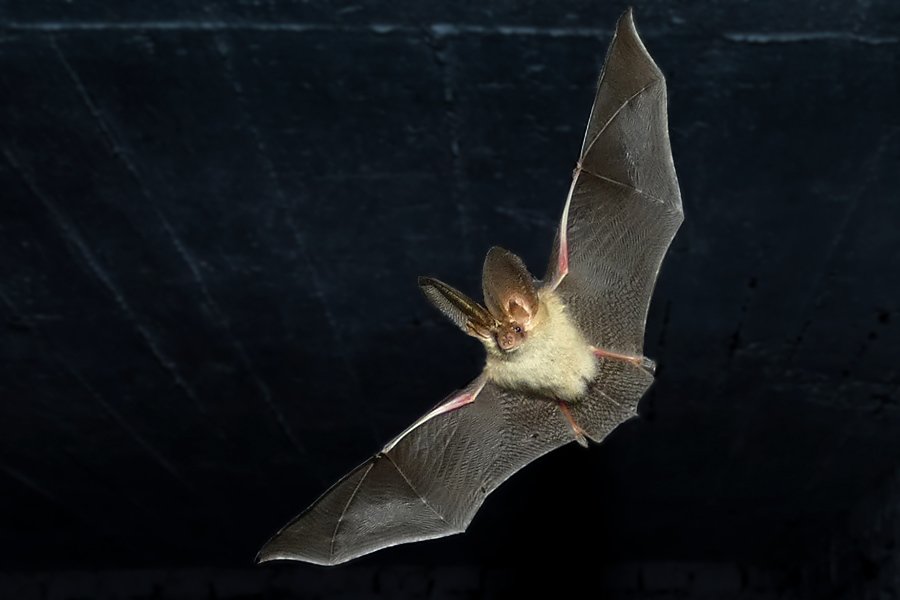
gacek brunatny, gacek wielkouch (Plecotus auritus) autor Janusz Kopik
If one of them fails to find food, another bat may feed it by regurgitating some of the blood it has already consumed. And this generosity is not reserved exclusively for close relatives. Vampire bats form long-term social relationships and can share food with unrelated individuals, including animals that are weak or unwell. So the vampire bat — a creature associated far more readily with horror than compassion — turns out to be a pretty solid friend: if someone is struggling, it shares its dinner.Are we humans equally helpful? I am not convinced. 😆
Their behaviour during illness is fascinating too. Sick bats may reduce some forms of social contact, groom one another less and participate less actively in colony life. In some species, researchers have also observed sick individuals remaining in their roost instead of going out to forage. Obviously this does not mean a bat is consciously thinking, “I’m ill, so I had better not infect everyone.” But the effect of the behaviour can look remarkably similar to our own social distancing.Then I heard the story that won the entire evening, simply because it combines three things I would never have expected to appear in the same sentence:
Bats, churches and European Union funding.
Bats often use the attics of old buildings, including churches, as colony sites. The problem begins when those buildings need renovation. A new roof may save a historic building while simultaneously destroying a roost that bats have used for years.That is why bat-conservation projects, including projects supported by EU funding, have paid for roof renovations and attic adaptations designed to protect both the building and its winged residents. I absolutely love stories like this.You go out one evening to listen to bats and come home knowing about echolocation, animal social behaviour, ecology, church architecture and European Union funding.
3. Board Games at Spodek — Veni, vidi, emi.
My third “yes” had nothing to do with wildlife, although it still involved creatures with a strong tendency to gather in large groups. Here we reach one of the greater absurdities of the way my brain works. I can travel around Japan alone by train. I buy tickets, change trains and somehow navigate enormous stations where I cannot even read half the signs. But taking a train in Poland? TERRIFYING. 😂 Naturally, my brain produced an entire list of very sensible reasons to stay in Warsaw. There would be too many people. It would be loud. I would have to figure out the train. What if I got something wrong? Why did I even need to go in the first place? My husband persuaded me, so I went. The journey there went smoothly. Spodek was enormous. I met several board-game friends, played a few games, spent a lovely time with a friend I had previously known through Instagram, and naturally did the one thing absolutely essential for someone attending a convention despite already owning far too many games: I bought a suitcase full of more games. Nobody said exercising the “yes” muscle would come without side effects.
The journey home brought me back down to earth quite efficiently because the train and I failed to understand each other, and I had to wait for the next one. Will I go again? I do not think so. 😂 And that is an important part of this experiment too. Saying “yes” does not mean I then have to convince myself that something was the greatest experience of my life and start attending every convention within a five-hundred-kilometre radius. I had a genuinely good time, but it was also simply too much. I came home completely overstimulated and with games I probably would never have bought under normal circumstances. I tried it. Now I know what it is like. I can be very glad I went — and just as comfortably decide not to go next time. When I look at these three yeses, there is really nothing connecting them. Getting up at a barbaric hour to look at birds. Eavesdropping on bats at night. A giant board-game convention in Katowice.
And yet all three were completely new experiences for me, and each one chipped a small hole into my rather concrete, closed-off world. Suddenly it contained a green woodpecker I had not even known existed. A cormorant drying its wings. A tree sparrow I would previously have called simply “a sparrow”. A gull that stopped being “common”. Kleptoparasitism. Bats talking above the Vistula. Vampire bats feeding hungry friends. Church attics renovated with their winged residents in mind. Board-game friends who suddenly moved from Instagram into the real world and sat across a table from me.
And I think that is exactly why I am exercising this little “yes” muscle of mine: to let some new colour and knowledge into my world before my brain has time to decide that staying home would be much easier. That is what I would encourage you to try too. Not some huge life revolution. Just, every now and then, do something you would normally dismiss. Maybe you will come home with a new hobby, a new friend, or an entirely unnecessary new word. Or maybe you will discover a bird you had no idea existed.
When was the last time you stepped a little outside your comfort zone and tried something new?
