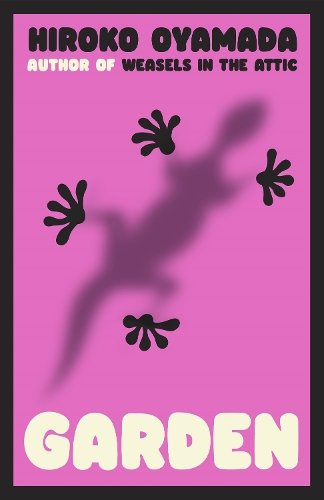
Garden- Oyamada Hiroko
“No one ever considers that a woman might not give birth, might not be able to give birth, might not want to give birth.”
Spider lilies. A gecko stuck to the windowpane. A husband on a family walk through the zoo. Loaches in an abandoned well. In-laws, ants, a spider on the wall, and a daughter obsessively collecting acorns.
In Hiroko Oyamada’s writing, nature is never just a backdrop. Flowers become ominous signs, the worlds of humans and animals begin to blur, and vegetation increasingly mirrors the inner states of the characters. What is living and seemingly ordinary slowly takes control of everyday life.
The Factory—sorry The Garden—is a collection of fifteen short stories, published in translation for the first time. Stories about family, motherhood, aging, and complicated relationships with those closest to us. About what remains unspoken and suppressed. About social norms that suffocate, and emotions that resist language. The most unsettling and incomprehensible species, it turns out, is us.
Oyamada is an exceptional observer of the everyday. From seemingly insignificant images and overheard fragments of dialogue, she weaves narratives with unexpectedly powerful—sometimes deeply unsettling—resonance. Her writing cannot be imitated. At times piercing, at times strangely humorous, and at others overwhelming in its cacophony of sounds, thoughts, and tensions, The Garden pulls the reader into a dense thicket of meaning and does not let go until the final page.
This is a book you cannot pass by indifferently. Its surreal comparisons mean you don’t devour one story after another out of hunger for plot. Each piece is different; each has its own weight and rhythm. And I have the sense that precisely because of its deep abstraction, The Garden will be read differently by every reader.
These stories concern all of us—myself included. They touch on the body, on roles, on expectations and social scripts we often accept without question. On how easily one becomes “strange” when they fail to fit the imposed form.
“No one ever considers that a woman might not give birth, might not be able to give birth, might not want to give birth.”
It is one of those sentences that lodge themselves under the skin. Just like The Garden itself—a quiet yet intense book. Dense like overgrowth you enter out of curiosity… and leave forever changed.
Who is this book for?
For readers who appreciate literature that is ambiguous, slightly surreal, and threaded with unease.
For those who value atmosphere and meaning over plot.
For readers interested in themes of the body, motherhood, family relationships, and social expectations—especially where there are no easy answers.
For anyone unafraid to leave a book with questions rather than closure.
✨ Final thoughts
The Garden offers no ready-made interpretations and does not guide the reader by the hand.
Instead, it invites you to step into a dense undergrowth of meanings—sometimes stifling, sometimes strangely familiar.
This is literature that works quietly. It does not impose itself, explain itself, or seek approval.
It stays—like a feeling that returns after time has passed, or a thought you cannot quite escape.
And perhaps that is why it feels so unsettlingly true.
