Angel’s Egg- Mamoru Oshii
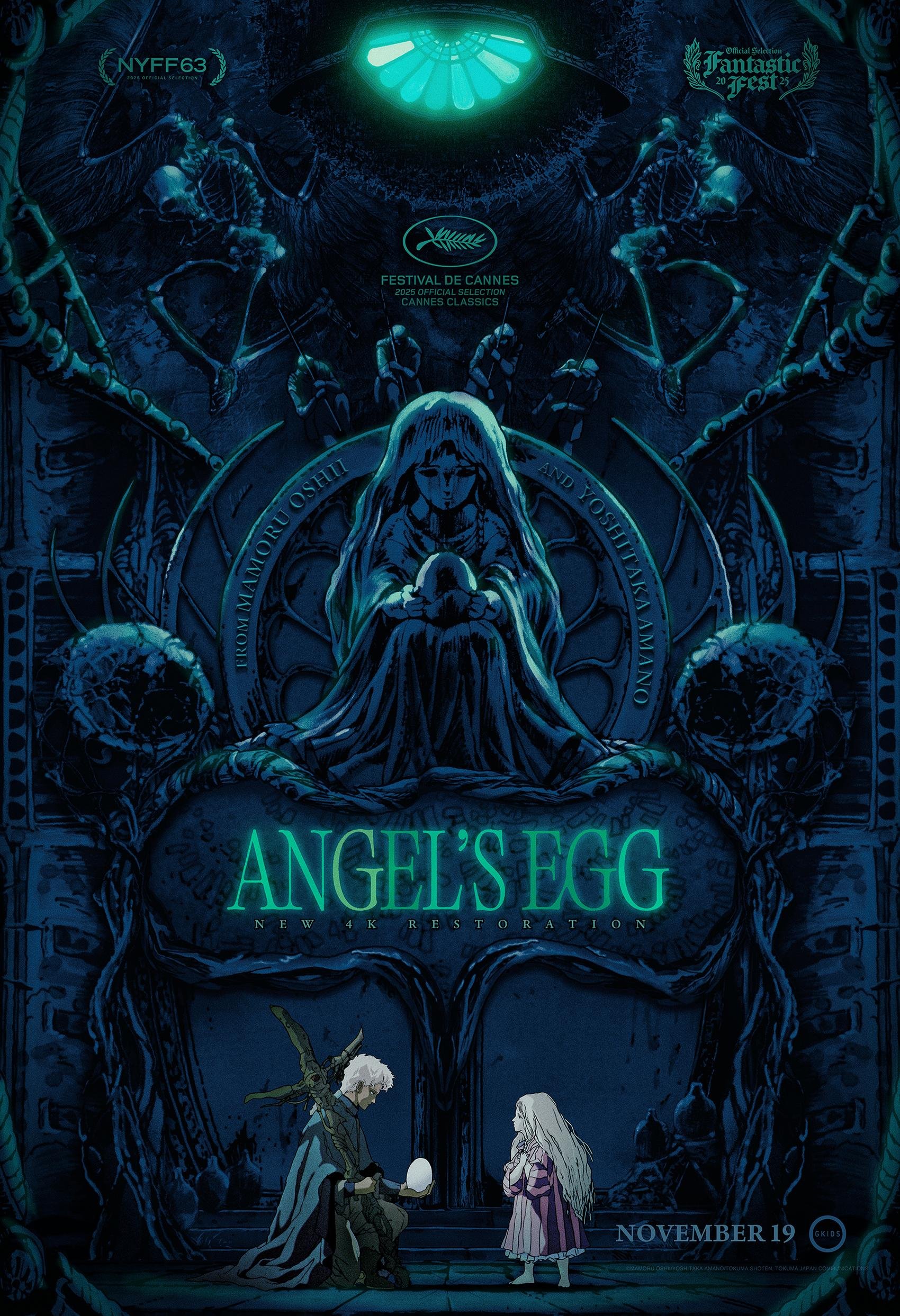
Angel’s Egg is another Japanese animated film that will stay in your mind for a long time — leaving you in doubt about what it was actually about. And everyone can have a completely different take on it.
The most popular interpretation says the film reflects Oshii’s struggle with faith — the director once considered becoming a Catholic priest but ultimately abandoned that path. The film is full of metaphors, and the only real conversation in it is about Noah’s Ark from the Bible.
The film opens with the appearance of a massive machine with a great eye — resembling the Eye of Providence, the All-Seeing Eye: a symbol of God’s omniscient care over humanity and the unity of the Holy Trinity. The machine is filled with sculptures. As it appears, alarms sound across the city and unease spreads.
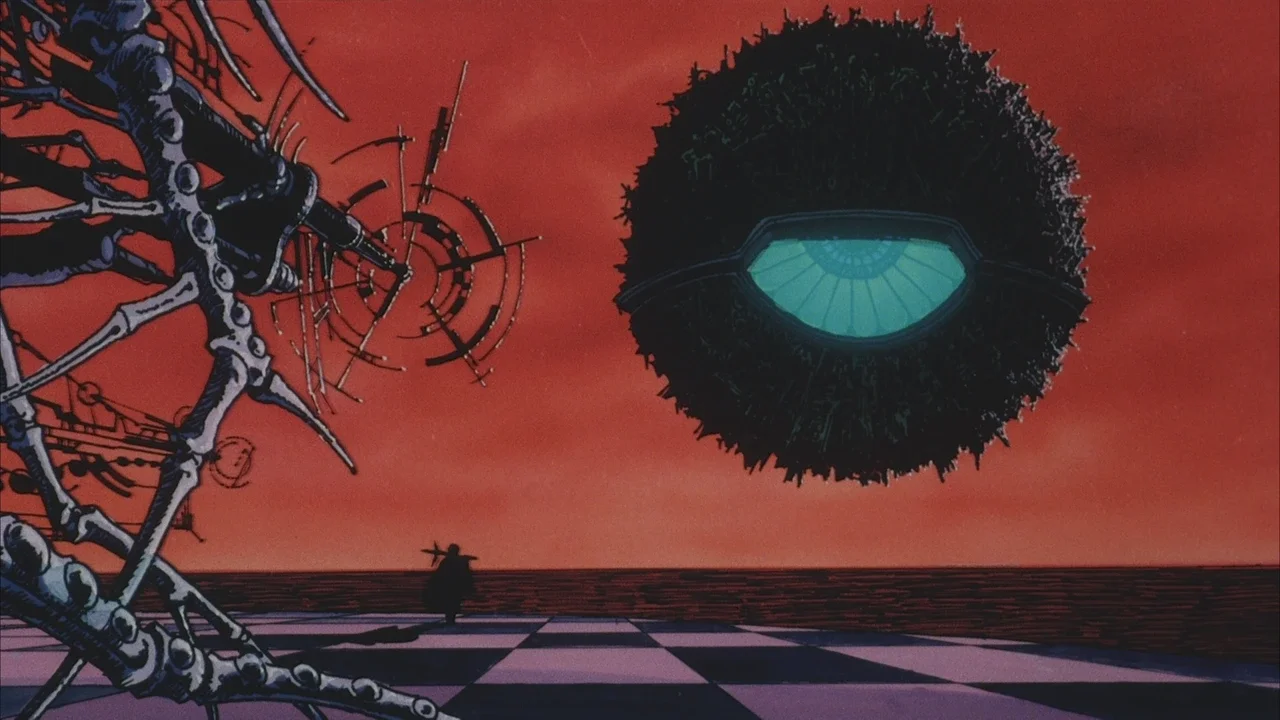
The “god machine” seems to represent organized religion. It absorbs saints as statues into its structure. In one scene, the soldier stands facing the machine on a field with a checkerboard pattern — as if playing chess, challenging the codified belief system while retaining his individuality. That’s why I believe that when the Eye of Providence appears at the start of the film, the warrior knows he must find another being in order to survive. In my interpretation, the soldier knows he must sacrifice her to save his own life — or perhaps his soul. As a soldier, he has witnessed the cruelties of the world — perhaps not a literal war, but a metaphor for how life itself and its associated suffering can reshape your personal belief system.
That’s when we meet the girl, who wanders the abandoned city carrying and protecting an enormous egg. She cares for it because she believes hope will hatch from it. The egg is a symbol of new life, rebirth, resurrection. The triumph of life over death.
The girl initially runs from the warrior, but over time she lets him accompany her. He tries to build trust with her. When they ask each other who they are — neither can answer. And that gives the film a tragic dimension.
The warrior tells the story of Noah’s Ark — but in his version, the dove that was sent from the Ark never returned. The people on the ark forgot about the dove, and eventually forgot the world they came from. He wonders whether the bird ever existed at all. The girl says it did, and leads him to a fossil of a giant bird.
At night, the fishermen statues come alive — ghosts who try to catch the shadows of fish, destroying everything around them. At first I thought it was a metaphor for war. Then — for greed. And then it hit me that the fish is the symbol of ichthys — one of the oldest symbols of Christianity, representing Jesus Christ, Son of God, Savior.
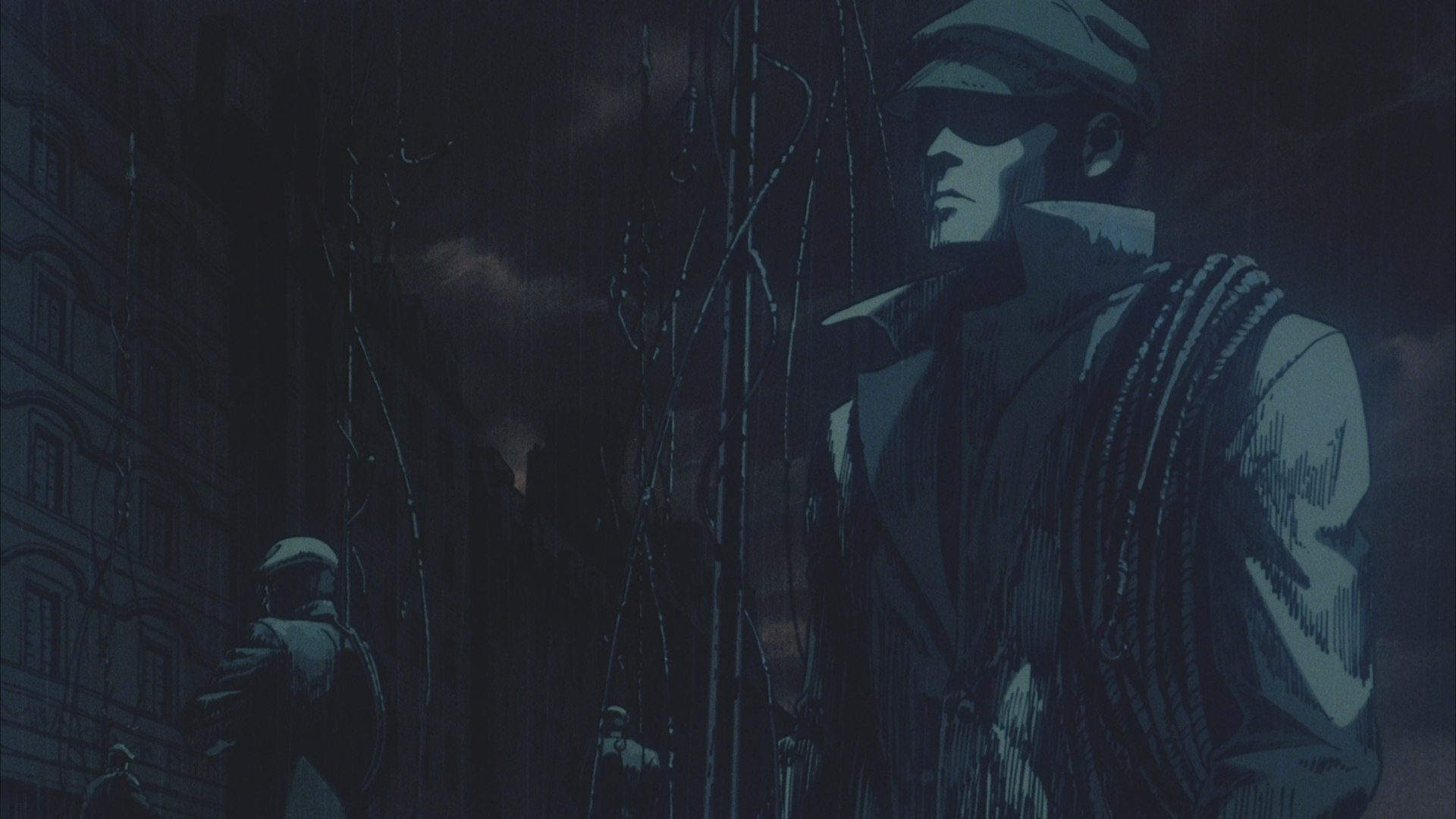
Before reading other people’s opinions, I thought it was about war or the eternal desire to possess. But the interpretation runs deeper: the fishermen statues are people chasing something that cannot be caught — shadows cast by a coelacanth, a prehistoric fish that has survived millions of years, much like faith itself. The fishermen destroy the city around them without even seeing it. The shadows exist, but whatever casts them is physically unreachable in this world. How many times in history have people torn down everything around them, chasing something they will never touch? When you make a decision — do you think, or do you rush with the crowd until you become part of it?
When the girl falls asleep, the warrior smashes her egg. But the egg is empty — and he knew it all along. The hope she was protecting was an illusion. The warrior doesn’t destroy the egg out of hatred — but out of a painful need for truth. He serves as a catalyst: forcing the confrontation of faith with reality, even if the price of that truth is destructive. Because if he had given in to her vision, if he had believed in the empty egg — he would have become another mindless fisherman chasing shadows.
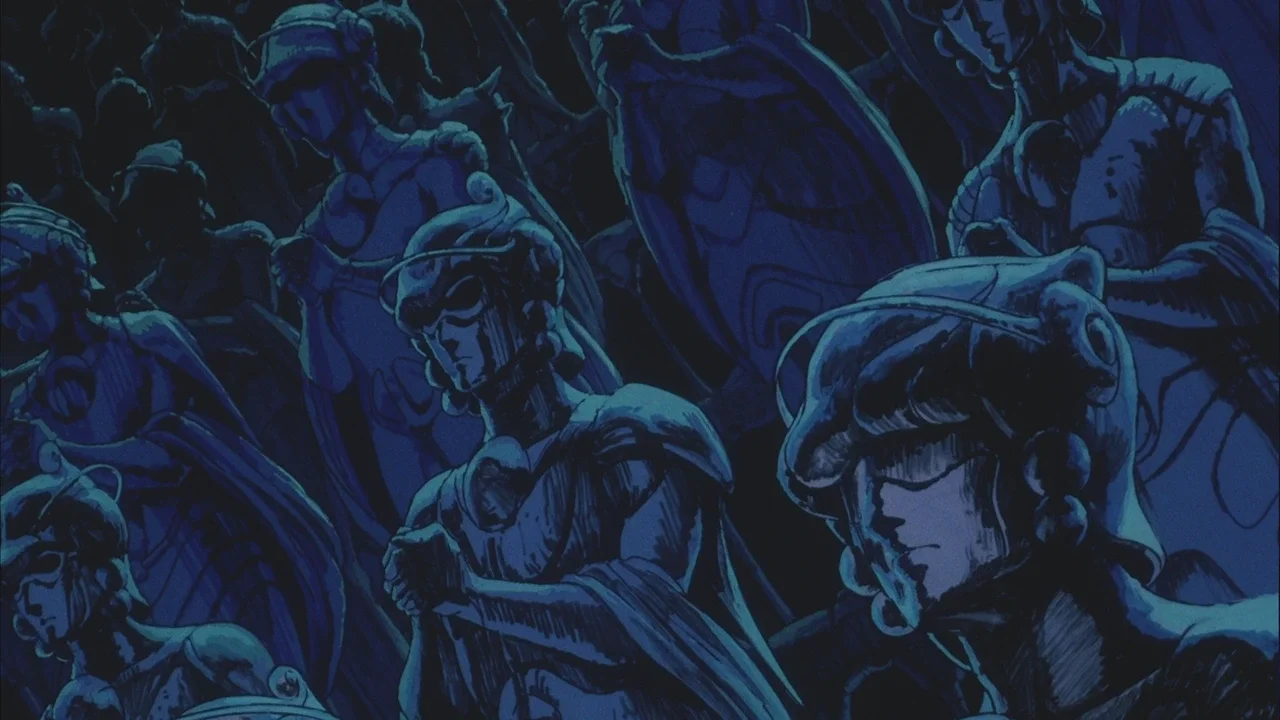
The girl chases after him but falls into the water and drowns. Her last breath transforms at the surface into a multitude of eggs. The warrior stands on a shore covered in feathers, watching as the girl — now a stone statue — takes her place on a throne among other sculptures inside the machine with the Eye. The machine flies away, and peace descends.
Those sculptures remind me of the facade of Westminster Abbey, where they continuously add contemporary martyrs — and it aligns perfectly with the film’s finale
At the very end, we learn that this entire world is built on something resembling the overturned hull of a ship — the Ark. The abandoned city perhaps represents the modern world and the isolation we all feel despite living so close to one another. Our world is built on the history of faith — regardless of whether you accept it, it has shaped our reality through millennia of war, expansion, art, trade, and philosophy.
This film left an enormous impression on me. Despite being made in 1985 — how incredibly relevant it is now.
The film is deeply sad. But I recommend it to everyone — to watch and to reflect.
If our world is built on the foundation of an “overturned Ark” — a rescue that became a prison — can we step beyond its shadow without destroying each other?
Faith can give us hope. But it shouldn’t switch off our thinking. I just wonder: when was the last time you made a decision in absolute silence, and when did you merely join the race, becoming one with the crowd chasing the same shadow?
“You got the power to let power go?”
K.W.
