Forest Breathing — Shinrin-yoku - Dr. Qing Li
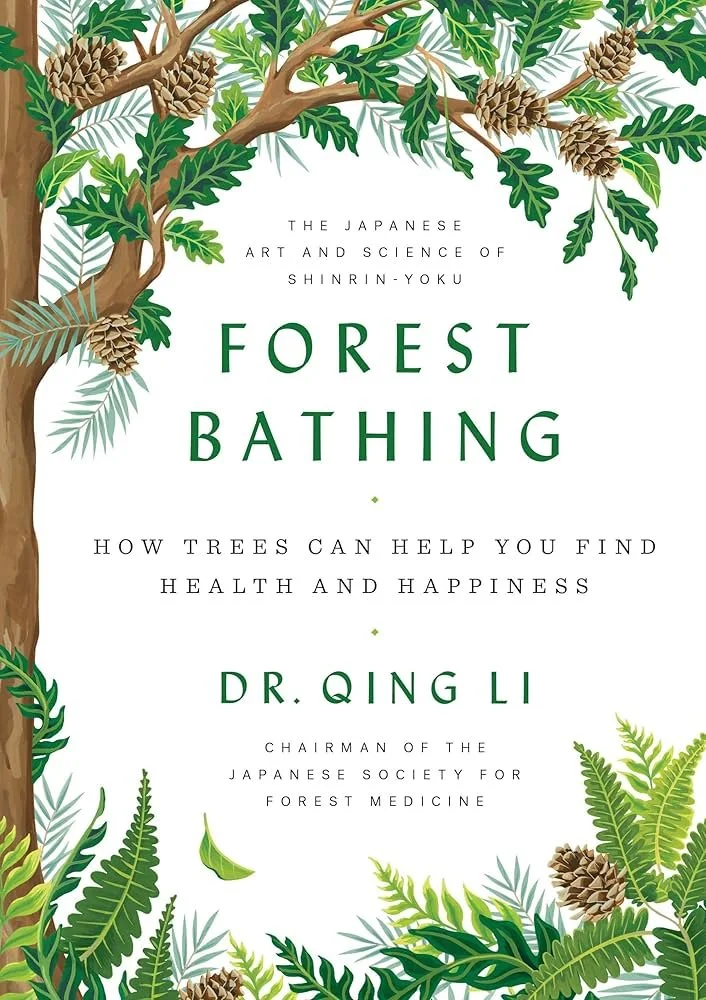
“Shinrin in Japanese means 'forest', and yoku means 'bath'. So shinrin-yoku means bathing in the forest atmosphere, or taking in the forest through our senses. This is not ex-ercise, or hiking, or jogging. It is simply being in nature, connecting with it through our sense of sight, hearing, taste, smell and touch. ‘
Shinrin-yoku: How the Japanese Art of "Forest Bathing" Changed My Approach to Stress
Have you ever stepped into a forest and felt the weight lift off your shoulders with every breath? It isn’t a coincidence. It is Shinrin-yoku—a Japanese practice that teaches us how to draw health directly from the trees.
In a world that never falls silent, the forest offers the only conversation that doesn't leave us exhausted. Today, I want to share what I’ve learned about "forest bathing" and how we can practice it, even if we live in the heart of a concrete jungle.
What exactly is a forest bath?
The word shinrin in Japanese means "forest," and yoku means "bath." So, Shinrin-yoku is "bathing in the forest atmosphere"—submerging yourself in the woods through all your senses. It’s not about exercise, strenuous hiking, or running. It’s about connecting with nature through sight, sound, taste, smell, and touch.
This idea is deeply rooted in Japanese wisdom. Both Shintoism and Buddhism view nature as sacred. For Zen Buddhists, nature is an open book of wisdom, and in Shinto beliefs, every tree, rock, or stream has its own spirit—kami. The term was coined in 1982 when the Japanese government recognized that modern society urgently needed a remedy for stress and burnout. That remedy was the forest.
Trees are our best therapists
Dr. Qing Li, a world-leading expert in forest medicine, has scientifically proven what we intuitively feel. Spending time among trees:
Lowers blood pressure and cortisol (the stress hormone).
Boosts energy levels and improves mood.
Strengthens our immune system.
This is all thanks to phytoncides—natural compounds released by trees to protect themselves. When we breathe them in, we receive a powerful boost to our own health.
Nature in "micro-doses"
Don’t have time for a 4-hour expedition into the wilderness? Researchers from Melbourne have shown that just 40 seconds of looking at greenery (even through a window!) can significantly boost concentration and mental clarity.
How to invite the forest into your home: If you can’t get to the forest, bring it to your interior. According to NASA, some of the best air-purifying plants are:
Instead of filters: Spider Plant, Snake Plant, and Peace Lily.
To soothe the senses: Aloe Vera, English Ivy, and palms (e.g., Areca Palm).
Essential oils — with mindfulness
In his work, Dr. Li also writes about essential oils. One Japanese study found that D-limonene (a citrus phytoncide) could be more effective than antidepressants at lifting the mood. The potential of oils is already recognized in medicine worldwide—for example, Harris Methodist Fort Worth Hospital in Texas uses 33 different types of essential oils for therapeutic purposes.
Important Warning: If you live with animals, extra caution is required. Dogs have a sense of smell up to 100,000 times stronger than ours. Scents that seem "gentle" to us can be toxic to them.
🚫 Oils that should NOT be used around dogs: Tea tree (melaleuca), pennyroyal, wintergreen, sweet birch, pine, cinnamon, peppermint, and ylang-ylang. These can cause respiratory distress, seizures, or liver damage in animals.
How to practice Shinrin-yoku according to Dr. Qing Li
As the author states: “The optimal time in the forest is around four hours and about 5 km of walking. But shorter sessions work too.” To fully benefit from a forest bath, Dr. Li suggests following a few simple rules:
Leave technology behind: Your phone, camera, and music stay at home. Disconnect from distractions.
Leave expectations behind: Don’t go with a specific goal in mind.
Slow down: Forget about time and pace.
Be present: Anchor yourself in the "here and now."
Find a spot: Sit on the grass, under a tree, or on a bench.
Observe and feel: Notice what you hear, see, and what your body is feeling.
Give it time: If possible, stay for two hours (though you’ll start to notice effects after 20 minutes).
Exercise: How to listen to nature
Quieting your thoughts can be difficult. As Dr. Li writes: “Tuning in to the sounds of nature can be hard. We are so used to noise. Even when we are quiet, there is the noise of our thoughts inside our heads.” To help with this, the author proposes a simple exercise:
Start with your breath: Find a quiet spot and sit. Focus on breathing deeply. With every exhale, let distractions float away.
Listen in all directions: Once the noise in your head quiets down, you will begin to hear the forest. The tap-tap of a woodpecker, the rustle of leaves, the calls of birds.
Close your eyes: This sharpens your hearing. As Dr. Li suggests: “If you listen hard enough, maybe you can hear the voices of the trees talking to each other in their phytoncide language.”
My personal challenge
I’ve decided to weave Shinrin-yoku into my daily life through:
Walking my dog with full mindfulness (no phone or headphones!).
Taking short "green micro-breaks" while working at my computer.
Adding new plants to my living room to create my own indoor oasis.
Healing doesn't require an escape to the end of the world. Sometimes it just requires stopping in front of the tree you pass every day on your way to work.
And you? Do you have a favorite plant at home or a beloved spot in the woods? Let me know in the comments how you "recharge your batteries" through nature!
