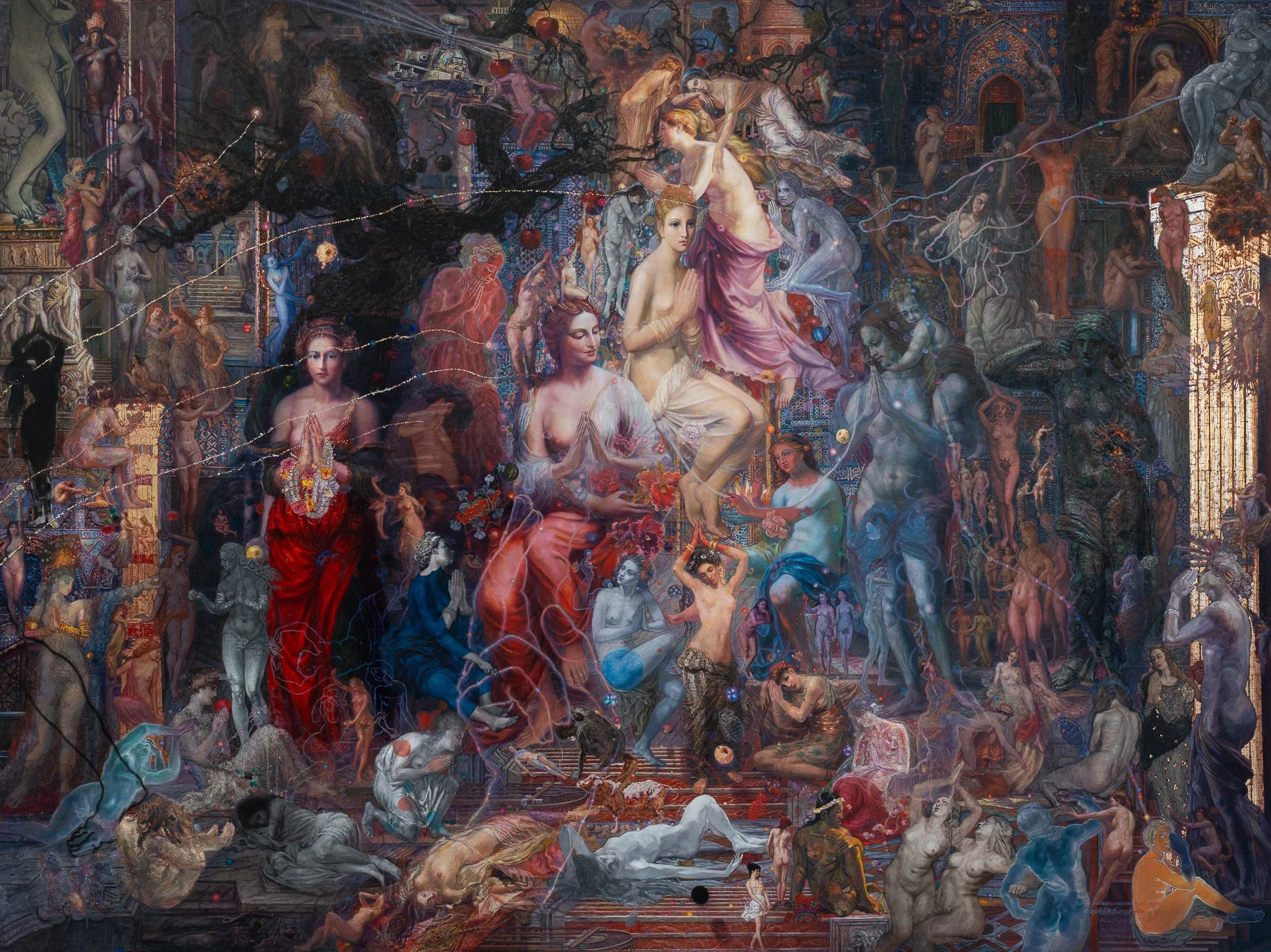
Thanarit Thipwaree — Sacred Battlegrounds and Poison Apple (2024)
Oil on linen, 300 × 400 cm — Museum of Contemporary Art, Bangkok
When I first saw this painting, I was completely drawn in. It’s one of those works that seem almost impossible to take in at once — a maze of figures, textures, and stories that spill across the canvas like a dream that refuses to end.
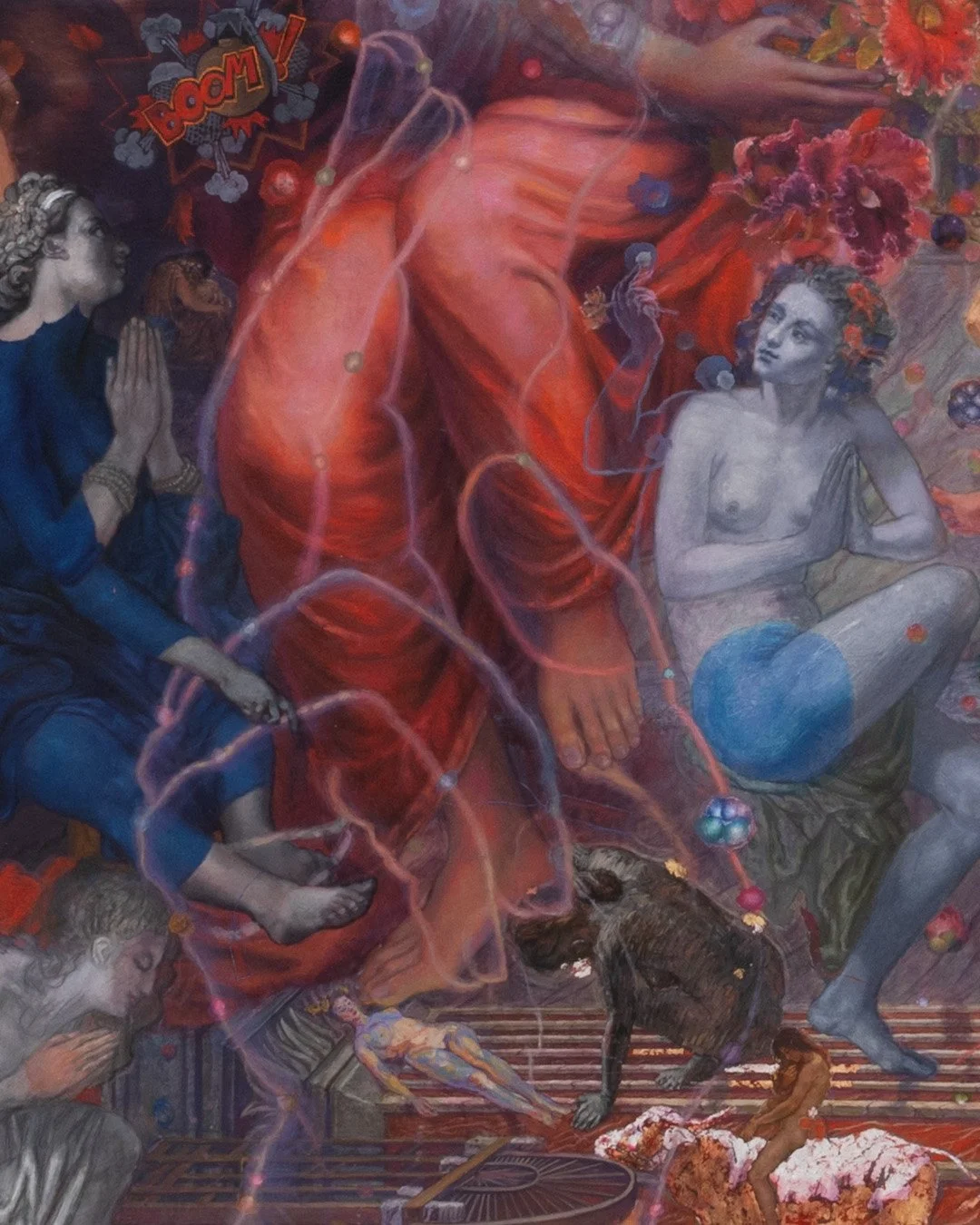
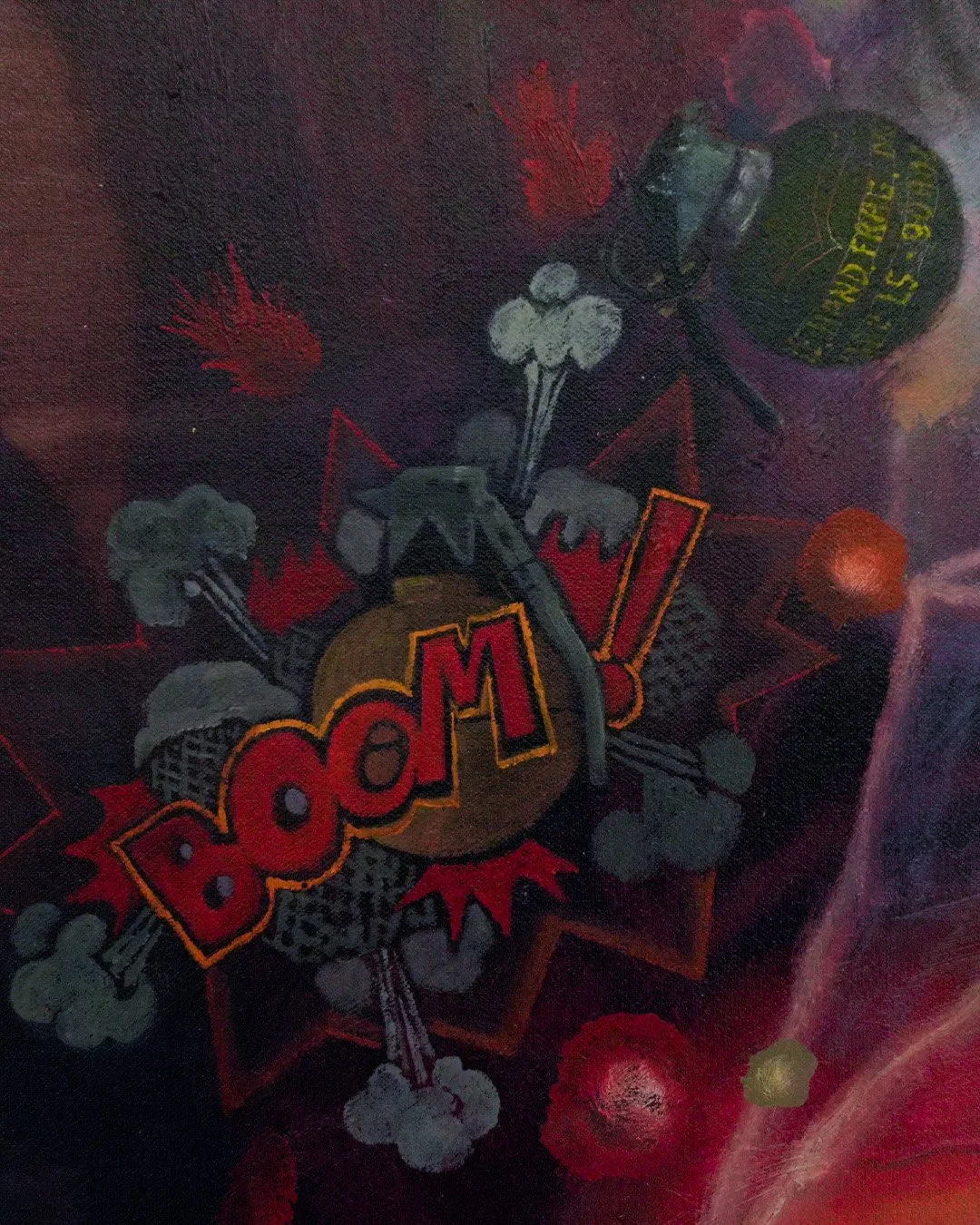
At first glance, it looks like a Renaissance fantasy — luminous, ornate, filled with mythic grace — but then you start to notice something else. The layering, the distortion, the way familiar bodies and gestures begin to dissolve into digital echoes. It feels like walking through the ruins of art history itself, with every era bleeding softly into the next.
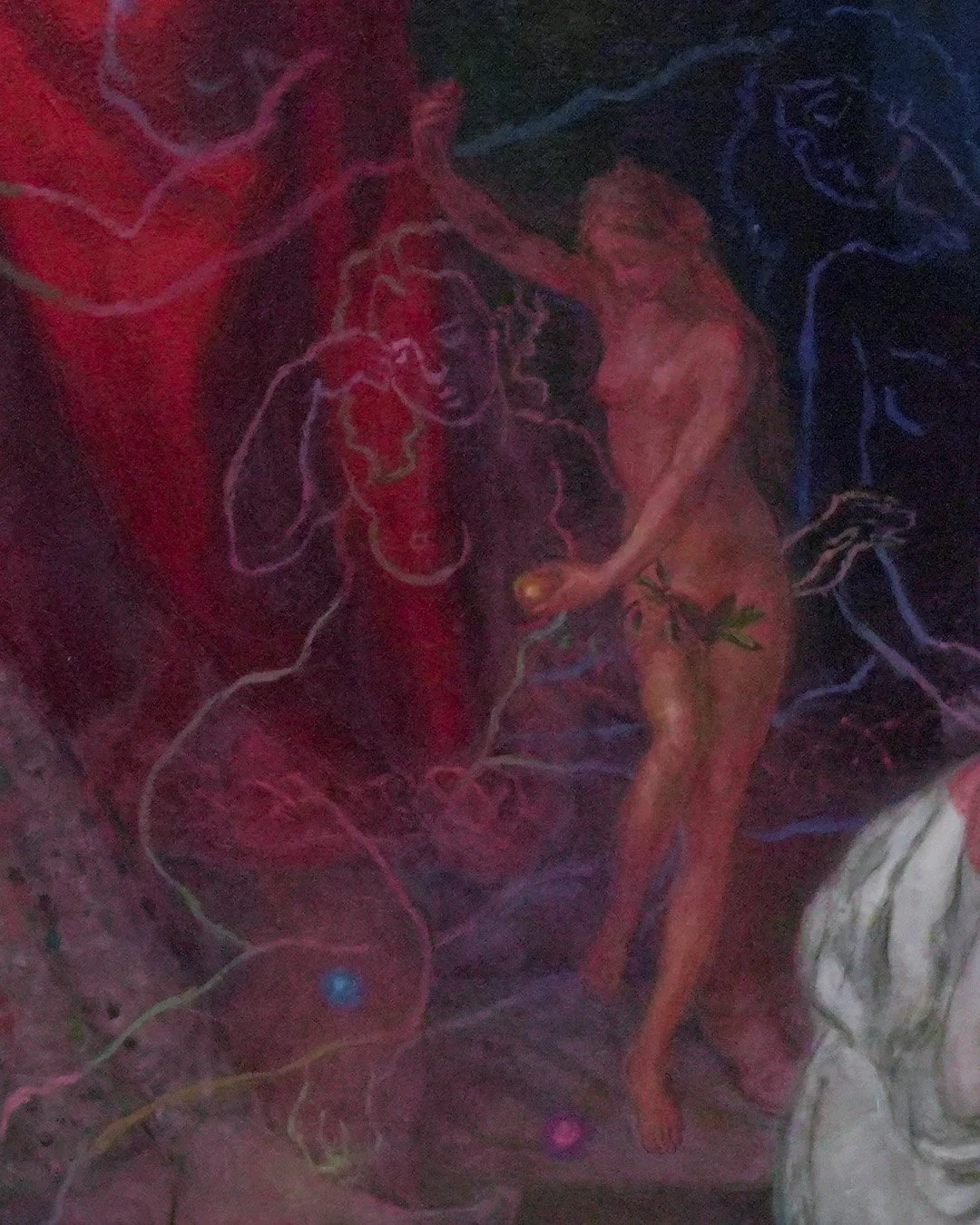
“Through Eve—the first woman in the creation myth—Thanarit Thipwaree presents a realm of faith and the scars of civilization. Blending contemporary technology with traditional oil painting, the artist re-examines the foundations of religion and culture, interpreting universal themes in a distinctive voice.
Adam’s deliberate absence—leaving only Eve beneath the apple tree—upends canonical narratives and prompts reflection on who owns history.
More than a conventional painting, the piece merges the artist’s craftsmanship with artificial intelligence (AI), generating multiple visions of Eve across eras and cultures against Jerusalem’s sacred skyline—a spiritual crossroads and perennial battleground.”
It’s hard to look away. The longer you observe, the more it feels like standing not before a single painting, but in front of history itself — a vast mosaic of creation, conflict, and desire. Each layer whispers another version of Eve: saint, sinner, goddess, mother, idea.
Thipwaree’s Eve isn’t innocent, nor is she guilty. She’s something else entirely — a constant, enduring presence at the heart of all human myths. It feels as if she holds the world together simply by existing — as if without her, none of it could begin.
She is every woman and all of history at once — the quiet centre around which faith, art, and civilization keep circling, century after century.
And what do I think?
Maybe that’s exactly what makes this painting so powerful. It doesn’t ask us to judge Eve, but to recognize her in ourselves — in our choices, our longings, and our endless search for meaning.
