Narcissus Garden- Yayoi Kusama
Yayoi Kusama is one of the most recognizable contemporary artists, but also one of the most solitary and uncompromising. For decades, she has created art as a form of survival — a way to navigate obsession, anxiety, and the fragmentation of the self.
Born in Japan in 1929, Kusama experienced hallucinations and intense psychological states from a young age, which later became the foundation of her artistic language. Polka dots, repetition, infinity, and reflection are not decorative motifs in her work — they are attempts to disappear within a world that can feel too overwhelming simply to exist in.
In the 1960s, Kusama worked in New York, operating alongside — and often in opposition to — an art world dominated by male figures. Her practice moves between performance, sculpture, installation, and painting, yet it consistently returns to the same question:
where does the “I” end, and where does something larger begin?
Today, in her nineties, Kusama continues to create. Her art is not about success or career — it is about endurance, repetition, and the need to dissolve the ego into something more universal.
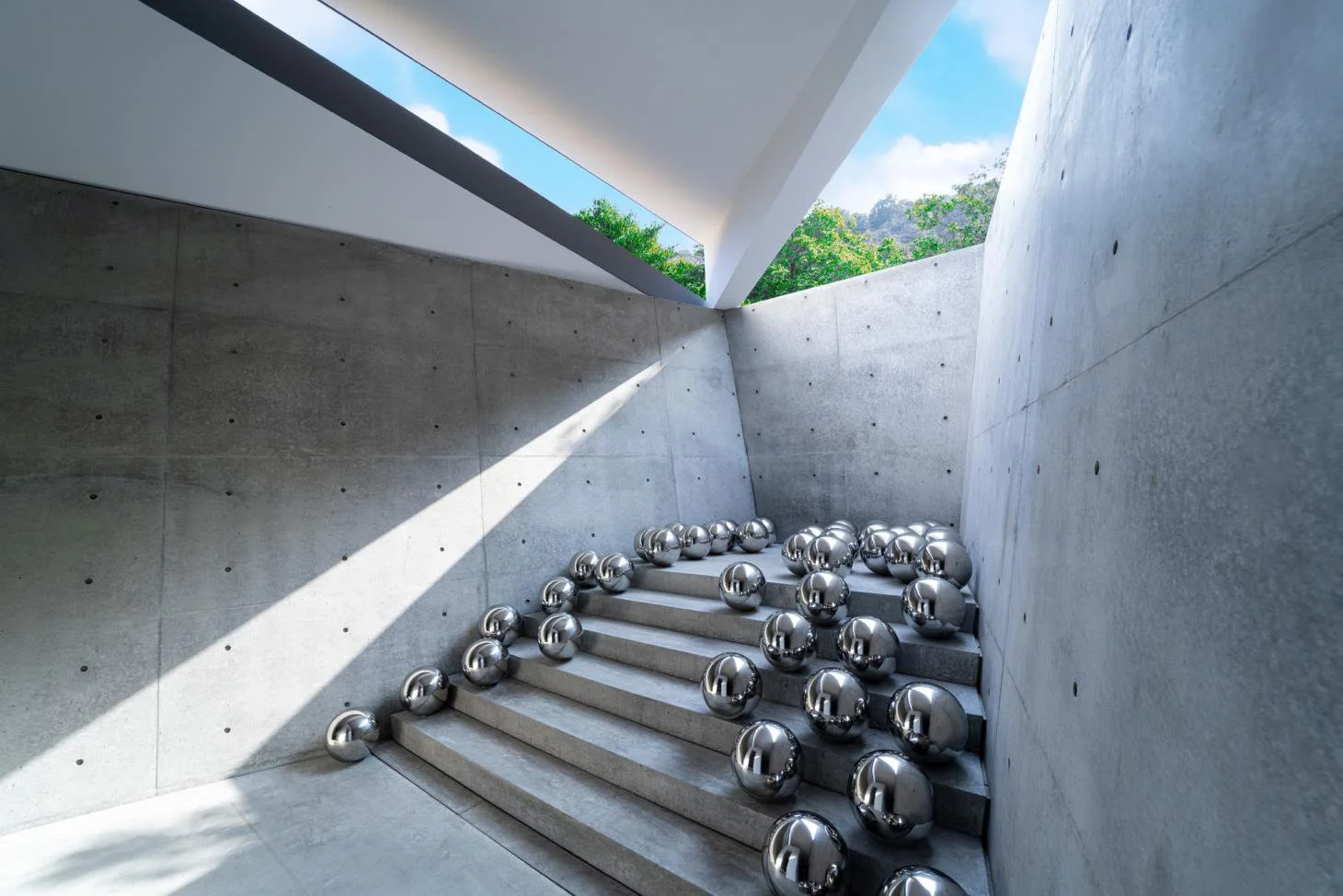
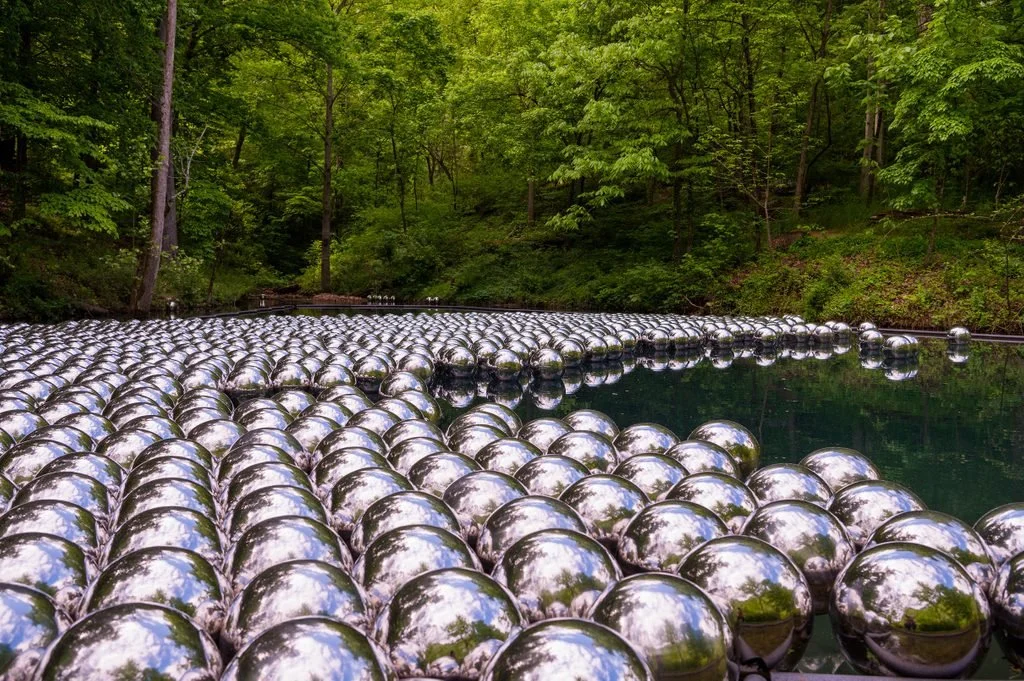
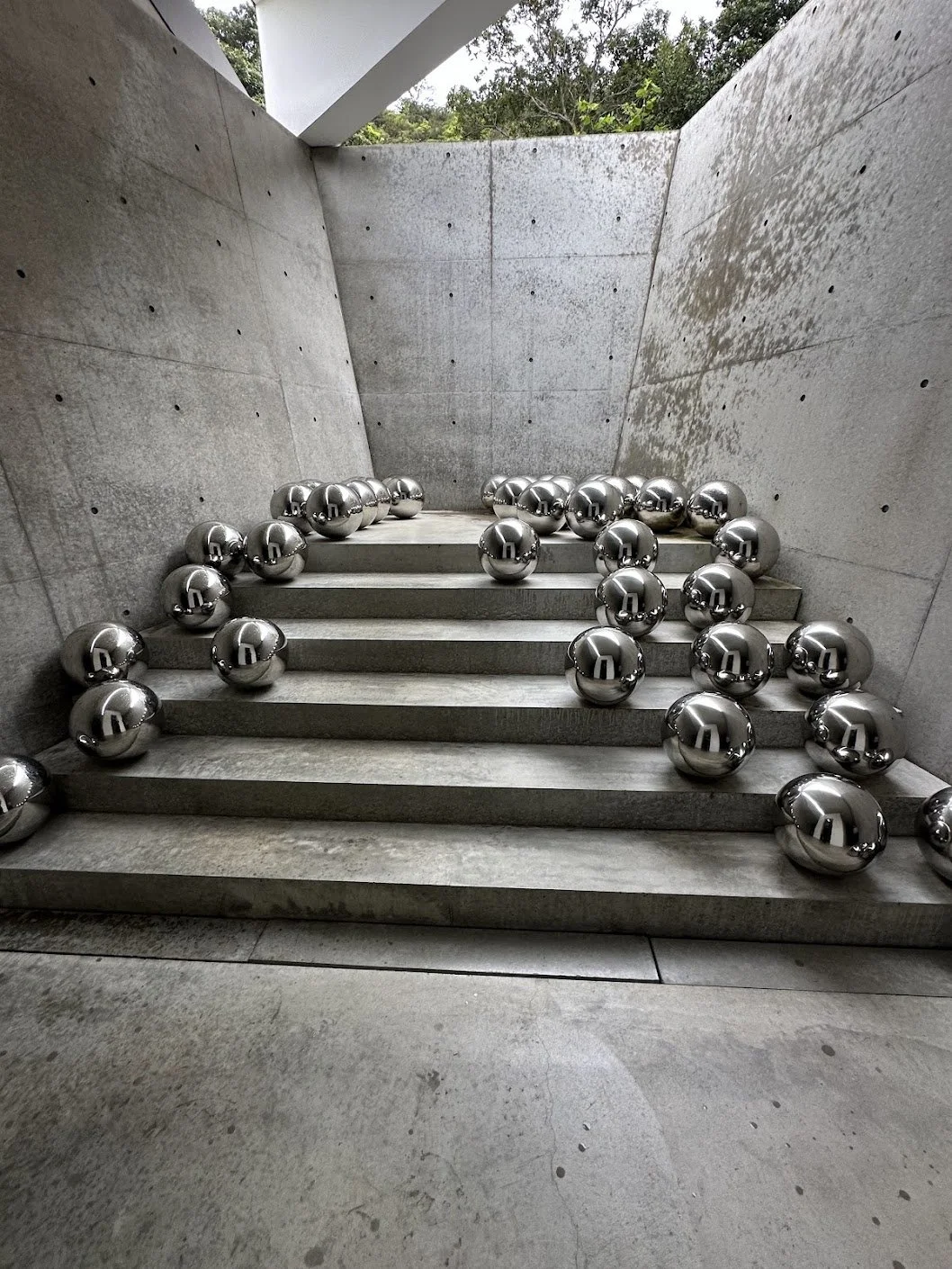
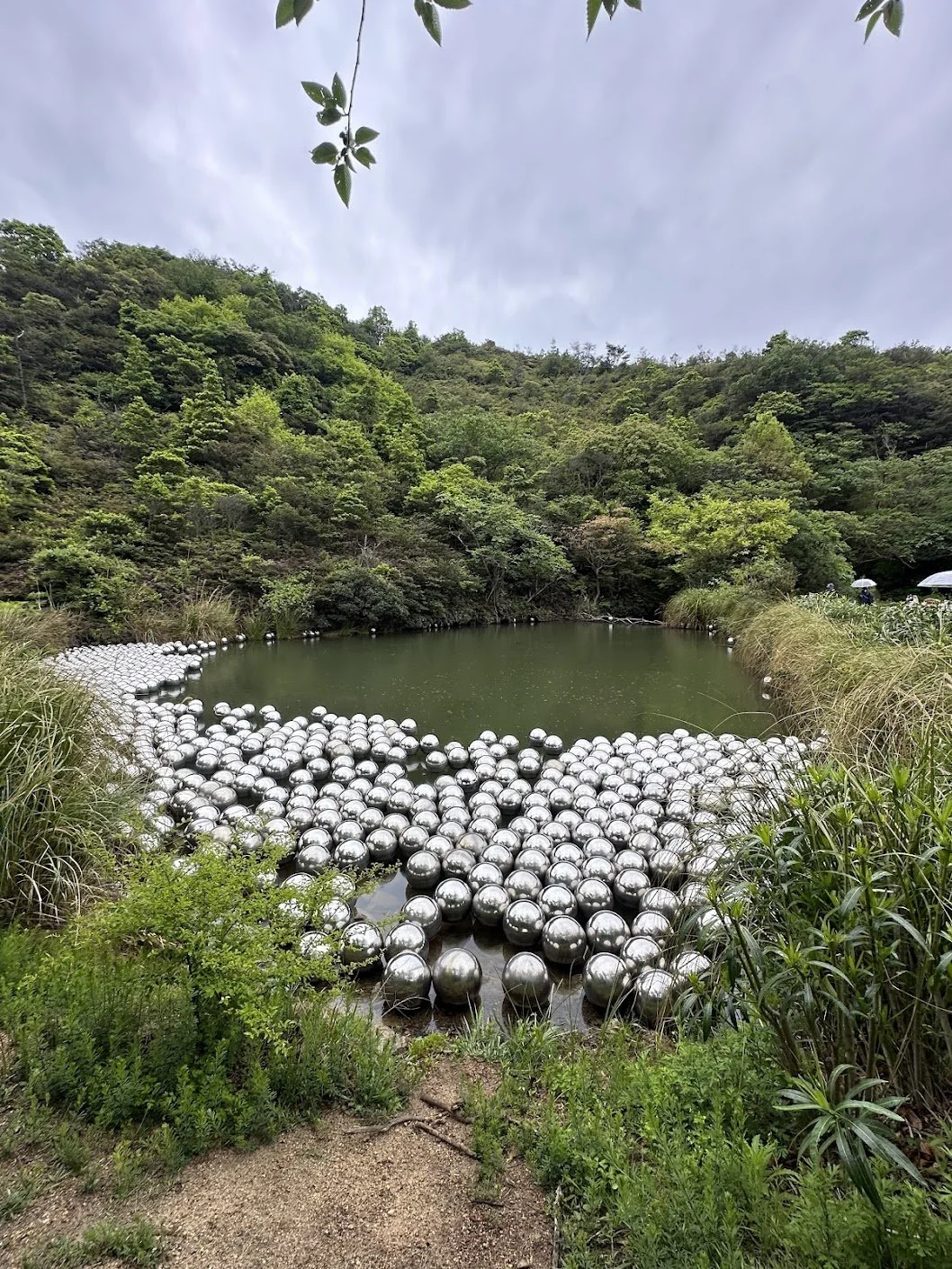
Narcissus Garden is a recurring work in Kusama’s practice, first created in 1966. Hundreds — sometimes thousands — of mirrored stainless-steel spheres scattered across the ground reference the myth of Narcissus, who fell in love with his own reflection.
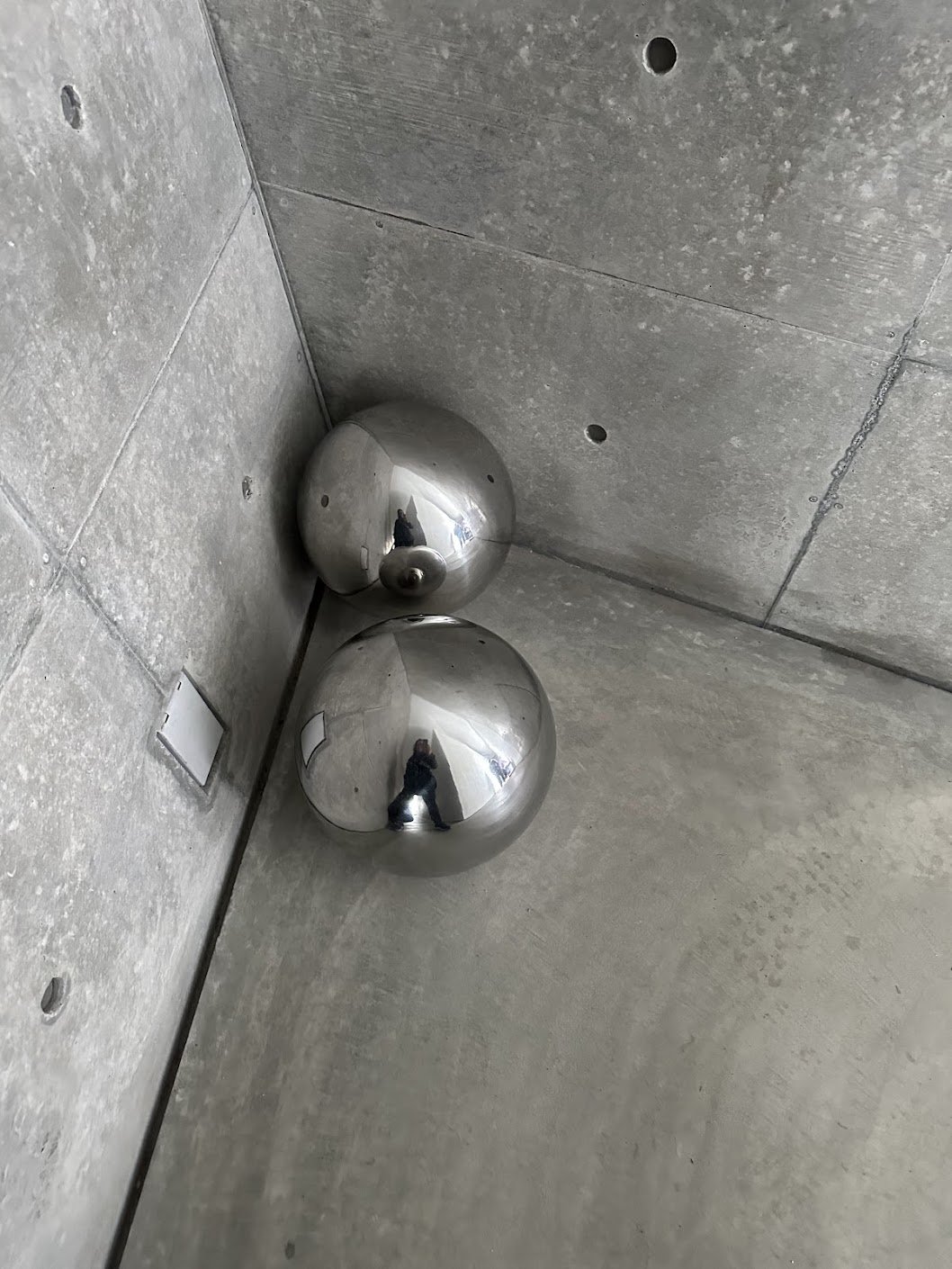
Each sphere reflects everything: the sky, the grass, the movement of air — and you. But never as a single, stable image. You appear fragmented, multiplied, elusive. Present, yet difficult to define.
On Naoshima, the work gains particular resonance. The island itself is a place of contrasts: art and nature, beauty and traces of industrial destruction, stillness and human intervention. The mirrored spheres do not compete with the landscape — they listen to it. They absorb it.
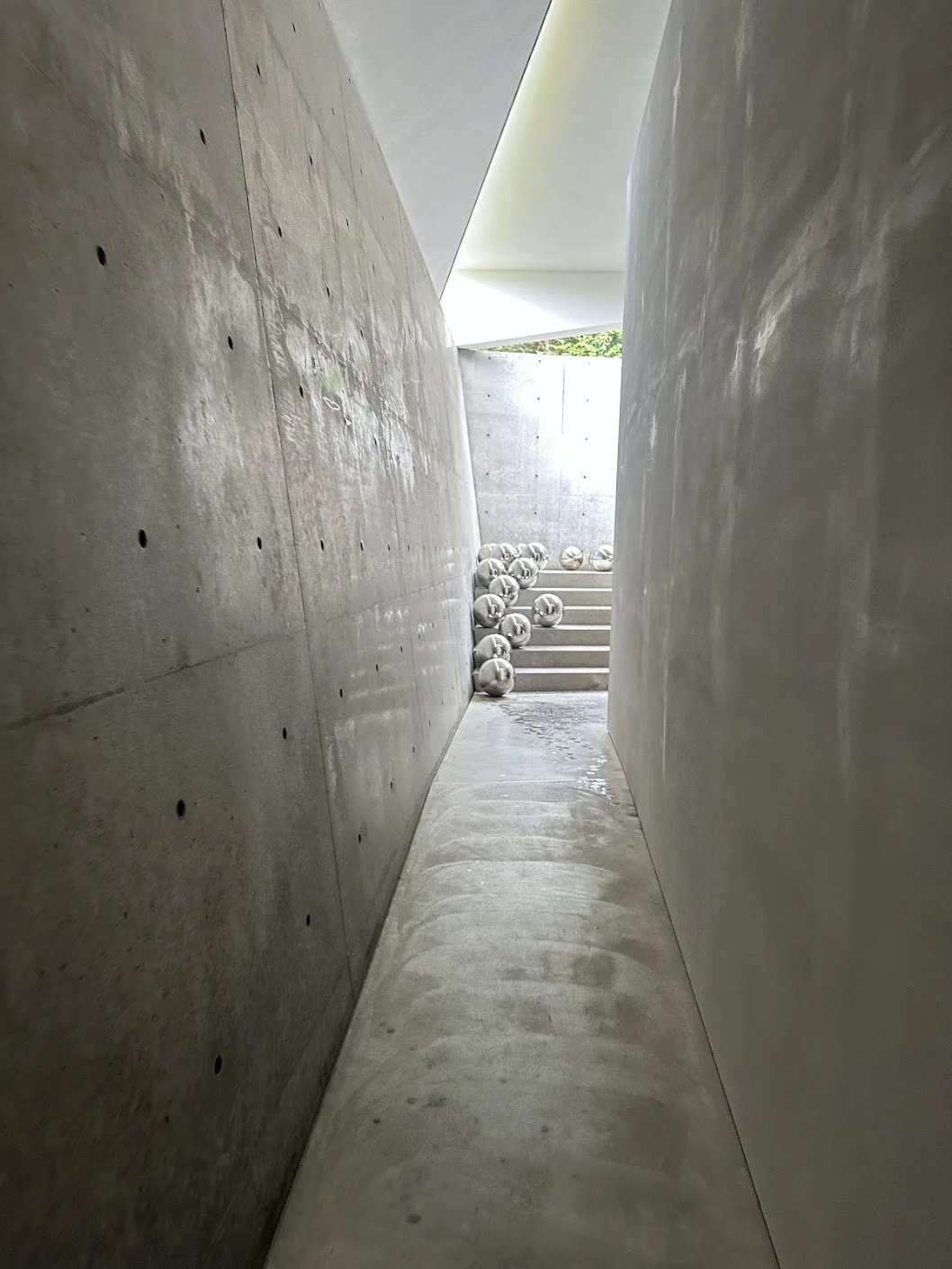
In 2022, to mark the 30th anniversary of Benesse House, Narcissus Garden was installed both inside and outside Valley Gallery — a space designed by Tadao Ando. Semi-open, filled with light and air, it feels more like a sanctuary than a gallery. It encourages attentiveness rather than spectacle.
Kusama has written about “self-obliteration” — the dissolution of the self through endless repetition, until it becomes part of something greater. Standing among these spheres, that idea becomes tangible. You are here — but not at the center. You do not disappear; you simply cease to be the only one.
It is mesmerizing.
And quietly unsettling.
Who are you, when you are only one reflection among thousands?
At the threshold of a new year, surrounded by plans for a “new me,” this work asks a softer, more important question:
can you recognize yourself beyond expectations, beyond noise, beyond what the world demands of you?
When you look into these mirrored spheres…
who do you truly see?
